
Virtual Campfire Ideas, Games & Activities

You found our list of virtual campfire ideas.
Virtual campfires are online events that include typical camp activities such as ghost stories, s'mores-making, and sing-alongs. Online campfire ideas are ways to recreate the bonfire experience on virtual meeting software like Zoom and Google Meet. The purpose of these gatherings is for guests to have fun and build connections with each other.
These events are an example of a virtual team building activity and are great ideas for virtual retreats. They are online versions of campfire games.
This article includes:
Here we go!
From s'mores kits to stargazing to spot Sasquatch, here is a list of ways to make Zoom campfires fun and engaging.
Mad Libs make great virtual campfire games. A reader asks for particular word types, such as nouns, verbs, and adjectives, and other players suggest random words. When all the blanks are filled, the reader shares the silly story.
To play Mad Libs on Zoom, you can either read the prompts aloud and ask participants to respond by typing in the chat or calling out suggestions, or you can collect answers on a Google Form and choose the funniest options.
We made some camp-themed Mad Libs you can use at your next virtual campfire:
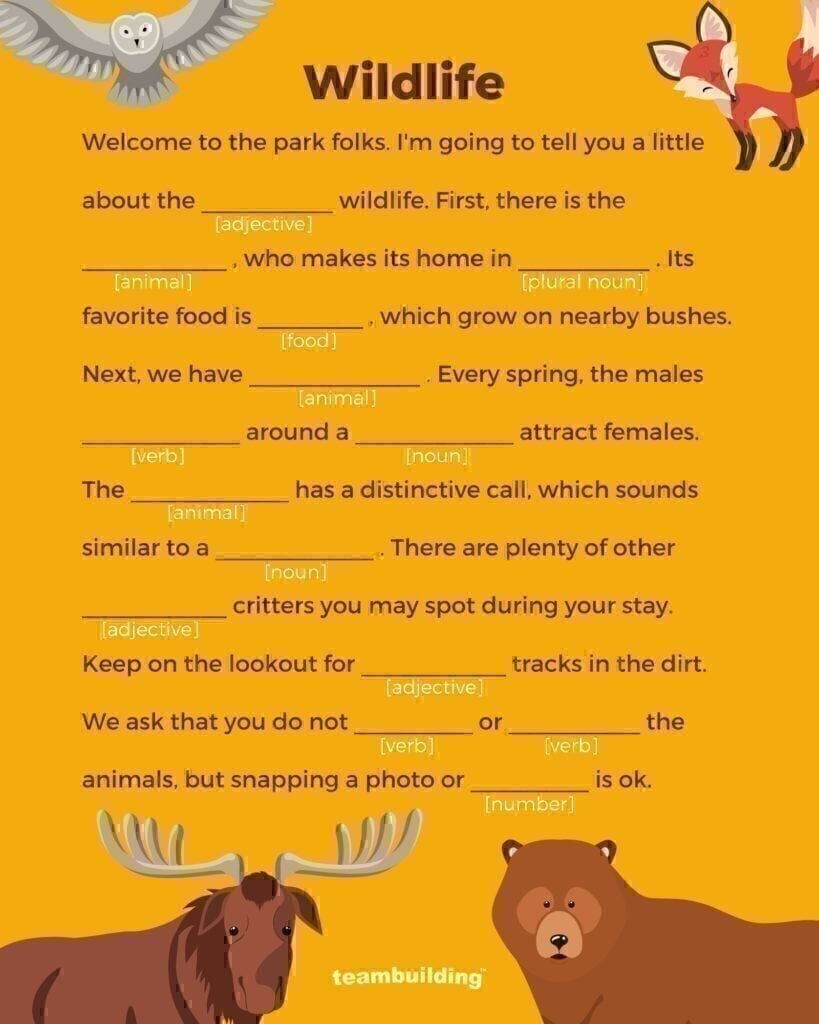
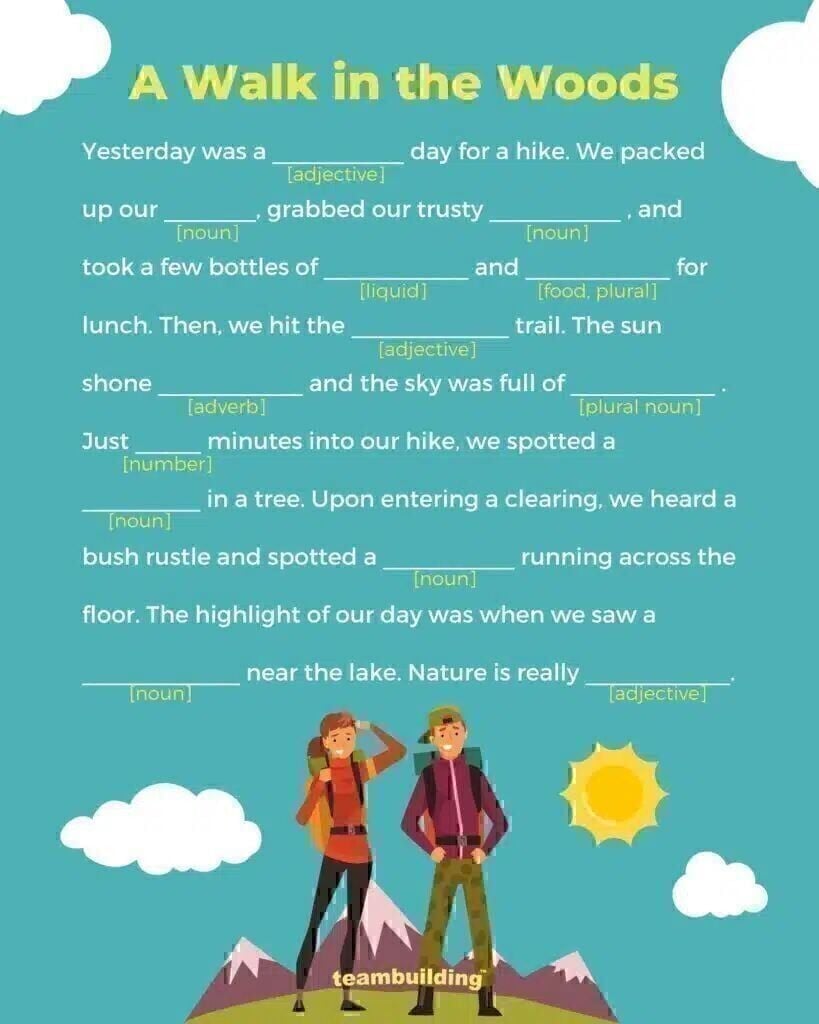
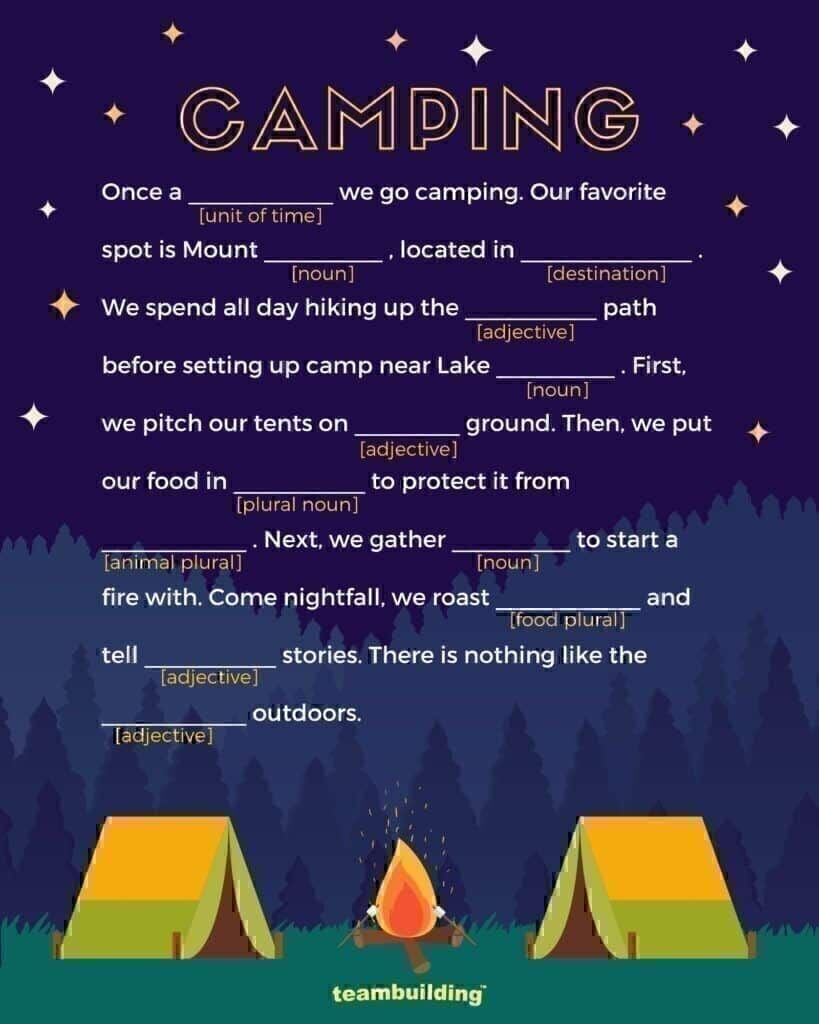
Check out more vocabulary games.
No campfire is complete without a fire. However, unless attendees happen to have a fireplace, they cannot build a bonfire in the middle of the living room. Candles are an easy and safe alternative. You can send your guests tealights to burn during the bonfire. For a fancier touch, mail scented candles with woodsy scents like bonfire or pine.
If you prefer not to risk open flames, then you can ship LED tealights. Or, display a
for ambience.We fun a fully hosted virtual campfire for teams called tiny campfire. The event is 90 minutes over Zoom, and we ship your guests s'mores kits in advanced. On the day of the event, everyone comes together for camp games and ghost stories. It's fun!
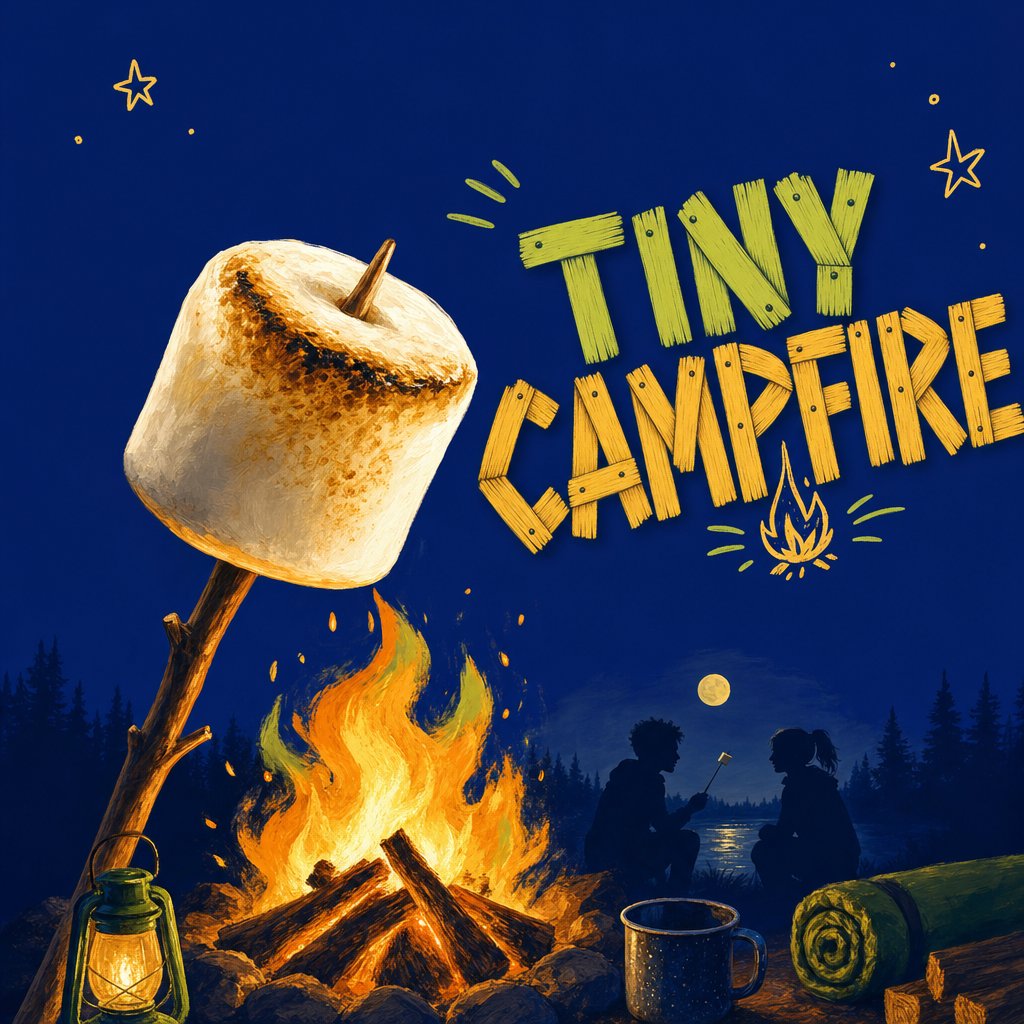
Virtual campfire games, ghost stories and real s'mores.
Learn more about tiny campfire.
Ghost stories are one of the best online campfire activities. You and your teammates can take turns telling each other terrifying tales, just like at camp. To set the mood, storytellers can sit in the dark and use a flashlight, play spooky music, and display creepy virtual backgrounds like haunted woods or graveyards. To turn story time into a competition, ask listeners to vote on the most chilling tale via the polling feature. You can also turn the exercise into an online games for team building by splitting the group into breakout rooms and giving each team five to ten minutes to craft a creepy story.
For inspiration, check out this list of scary stories from Huffpost.
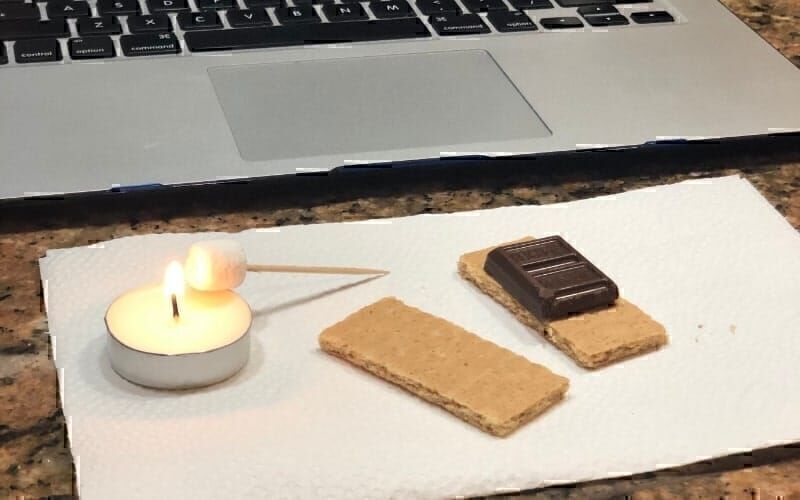
S'mores are most folks' favorite part of camping. To fully recreate the feeling of gathering around a bonfire, send attendees s'mores kits. At minimum, the kits should contain mini graham crackers, marshmallows, and chocolate. You could also include a tealight candle so that guests can toast the marshmallows at their desks. For a more gourmet s'mores experience, you can include fancy ingredients such as artisan chocolate bars, cookies, peanut butter or hazelnut spread, salted caramel, shredded coconut, and flavored baking chips.
Pro tip: Host a s'mores creation contest and award a prize to the entrant with the most innovative or tasty recipe.
Spot Sasquatch is a woodsy take on Where's Stripey Guy. To play this game, first add images of Bigfoot into ordinary photos. Then, gather the group together on a video call and share your screen. Players can either call out answers, type the location into the chat, or circle Bigfoot using the annotation tool. The first player to spot Sasquatch wins a point.
We made a few starter graphics you can use for your game.
[gallery link="file" ids="https://blog.teambuilding.com/wp-content/uploads/2021/04/Spot-Sasquatch-1.jpg|Spot Sasquatch 1,https://blog.teambuilding.com/wp-content/uploads/2021/04/Spot-Sasquatch-2.jpg|Spot Sasquatch 2,https://blog.teambuilding.com/wp-content/uploads/2021/04/Spot-Sasquatch-3.jpg|Spot Sasquatch 3"]
[gallery link="file" ids="https://blog.teambuilding.com/wp-content/uploads/2021/04/Spot-Sasquatch-1A.jpg|Answer-Spot Sasquatch 1,https://blog.teambuilding.com/wp-content/uploads/2021/04/Spot-Sasquatch-2A.jpg|Answer-Spot Sasquatch 2,https://blog.teambuilding.com/wp-content/uploads/2021/04/Spot-Sasquatch-3A.jpg|Answer- Spot Sasquatch 3"]
Feel free to get creative and add Sasquath into non-woodsy scenes such as your company retreat, Mars, the Mona Lisa, the presidential inauguration, or a Katy Perry concert.
Zoom sing-alongs are one of the best remote campfire ideas. Before you launch into a round of campfire karaoke, take a moment to check that participants unmute their microphones.
The best campfire songs are familiar tunes that folks are likely to know by heart. For example, B-I-N-G-O, Old McDonald had a Farm, and The Lion Sleeps Tonight. Also, pop culture hits like American Pie, Brown-Eyed Girl, and Take Me Home, Country Roads. Your song choice depends on your team's taste. If you know that your group knows every word to Beyoncé's "Crazy in Love," then feel free to belt it out at your online campfire.
You can also turn the activity into a game of "finish the lyric."
To play:
Singers lose one point for flubbing the lyrics and gain a point for finishing strong. You can also award extra bonus points for factors like falsetto, flair, and group harmonies.
Lightning Scavenger Hunts are Zoom games that require participants to fetch objects from around the house. The first player to return to their seat and show the requested item on screen wins a point for themselves or their team.
You can add your own prompts to the list, and can also award points for creative or unusual objects.
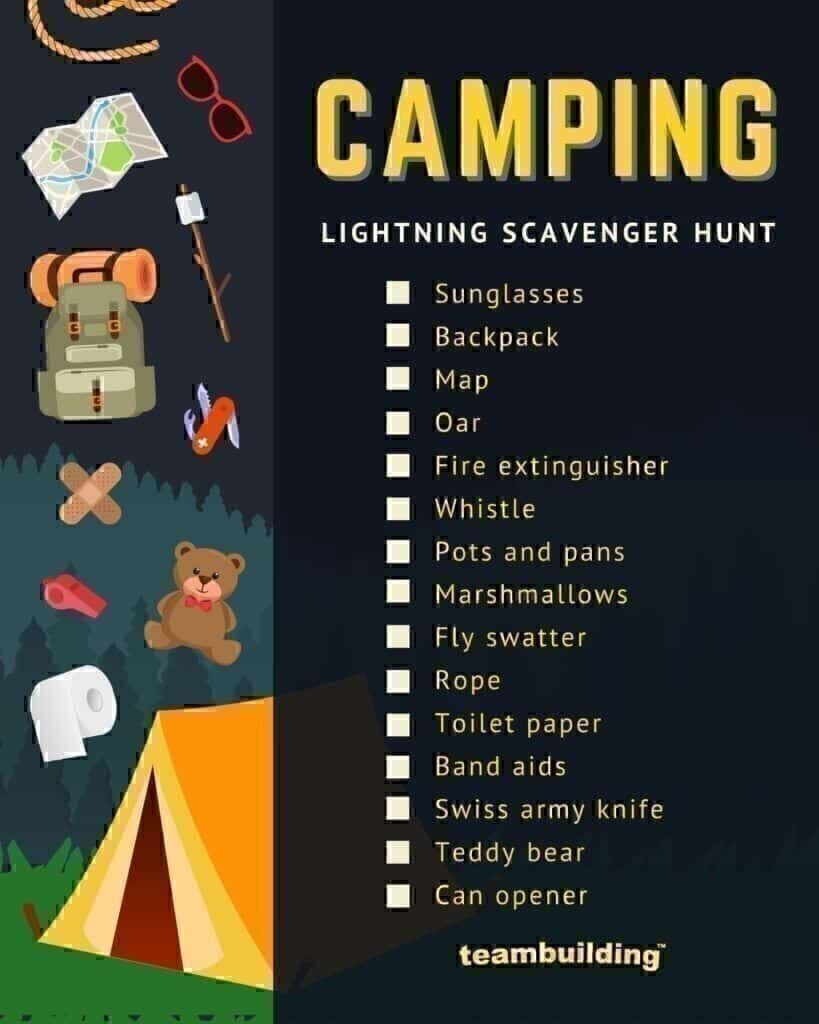
Read more about lightning scavenger hunts, and see our guide to digital scavenger hunts.
Camping and hiking go hand in hand. Unfortunately, you cannot scale a mountain or explore a canyon while video conferencing colleagues. Instead, take virtual panoramic tours of national parks and natural wonders.
Here are a few virtual hike suggestions:
First, decide on your destination. Then, pull up the virtual tour or video and share your screen.
Some parks also offer guided Zoom tours with rangers. Another option is to encourage your crew to go on a real hike the week before your event, then share nature photos to an online album.
Check out our longer list of virtual park tours.
Part of the thrill of camping is the thrill of withstanding the forces of nature. You can test your team's survival savvy through a series of challenges.
The easiest way to play survival games on Zoom is to use a trivia app or the polling feature to give a multiple choice pop quiz on first aid or adventure smarts.
For example, What do you do if a friend gets bitten by a snake?
The correct answer is C.
Another way to play is to present specific scenarios, such as a tornado hits the campsite or zombies attack the woods, and ask each team or teammate to outline a survival strategy. Then, give each player the chance to explain their plan and give points to the most creative response.
You could also use Google Forms, a slideshow software, or an online quiz program to create a choose your own adventure game.
For similar puzzles, check out our list of team building survival exercises.
Geocaching is a hobby that involves using GPS technology to find hidden treasure. First, download the Geocaching app. Then, follow the app's coordinates to locate nearby treasure. Even most small cities host hundreds or thousands of caches. Typically, treasure hunters enter discoveries in an online log and return the objects to the hiding spot for other geocachers to find.
You can ask your team to snap a picture or two of the uncovered caches and share the photos during the call. Or, if your team wants to join Zoom via mobile app, then participants can hunt in real time. Another option is to compile a cache together during a Zoom call by voting on items to include and collectively deciding a hiding place.
Check out our full list of remote treasure hunt apps.
Starting conversation at a virtual campfire can be just as tough as starting a fire on an actual camping trip. Here are some talking points to get your crew chatting.
Virtual Campfire icebreakers:
Check out our full lists of icebreaker questions and campfire questions.
Whatever your critter comfort level, you can enjoy animal encounters during online camping trips by watching animal cams. Simply queue up a wildlife webcam with your favorite forest creatures, share your screen, and enjoy.
Here are some forest animal cams to check out:
For a more interactive experience, you can find a webcam that permits the audience to feed the animals, such as DashDucks.
Sleeping under the stars is one of the benefits of camping. Virtual stargazing allows your online group to enjoy the beauty of the night sky and hunt for constellations without leaving the computer.
TheSkyLive's online planetarium displays an accurate view of the night sky from various locations. During your call, you can tour each of the attendees' towns, or take a trip to cities around the world. We recommend viewing one destination at a time and sharing the screen so that the whole group can look together. Perhaps turn on the annotation feature so that teammates can circle constellations.
You can also navigate the cosmos with GoogleSky.
Twenty Questions is a classic question game that is fun for virtual campouts.
There are two main ways to play.
Way 1:
Ask a partner or group twenty short personal questions. For example, When you were in kindergarten what did you want to be when you grew up? or What is the strangest object you ever found in your pocket?
The questions should be delivered rapidfire, however you can pause the game to discuss an interesting answer.
Way 2:
Pick a random object. Other plays can ask up to twenty yes or no questions to figure out the mystery item. For example, if the object is a giraffe, the conversation might start like this:
Q: Is it an animal?
A: Yes.
Q: Is it a pet?
A: No, not usually.
Q: Would it fit in my house?
A: No.
Check out more fun question games.
Would You Rather is a game that asks players to choose between two options. The choices are typically uncomfortable, strange, or gross, and players often try to make each other squirm. The absurdity of the situations make Would You Rather an amusing virtual campfire game.
Here are some prompts we created specifically for Zoom bonfires:
You can use the polling feature to determine the most popular answer, or you can ask the group to respond out loud.
Find more Would You Rather questions.
This or That is a simple game that asks players to choose between two related options.
We created a list of camping themed this or that prompts.
Camping this or that:
Check out more This or That questions.
Online orienteering tests teams navigation skills and geographical savvy. To do this activity, you will need to create a GeoGuessr account. Then head to the website, choose a location category, and share your screen. GeoGuessr will display a street-view photo from a random destination. The team must guess the location by clicking a spot on the accompanying map. GeoGuessr awards points based on the distance between the chosen location and actual location.
Pro tip: Turn the exercise into a competition by splitting into teams and comparing scores. Or, allow every attendee one turn and award a prize to the player with the highest score.
Virtual charades makes a great online campfire game. You can either split into teams or play as one large group.
To play the game during a video call, first privately message the turntaker a prompt in the chat. You can use a charade generator to come up with ideas, or draw inspiration from pop culture. Bonus points if you stick to an outdoor and camping theme for prompts.
When the round starts, spotlight the turntaker. The player will act out the phrase without speaking or typing the answer. The round ends when a participant guesses the saying. You can turn the game into a race by introducing a two minute time limit, or you can allow the round to continue until players guess correctly.
Improv activities make great virtual campfire entertainment. Improvisation is the art of acting without a set script. Instead of reading lines, performers react spontaneously to actions and cues.
Simply pick a game, ask for volunteers, determine a scenario, and start the scene. During the sketch, spotlight the performers so that everyone in the audience can follow the action. Depending on the game, you can either allow the scene to reach a natural end or impose a time limit. These games encourage quick-thinking, creativity, cooperation, and communication, plus they are amusing.
Check out our list of improv activities.
For adults, the best part of camping is often sipping a beverage from a thermos. Hosting a themed cocktail hour is one of the most fun Zoom camping events.
Here are some camp-themed cocktail recipes for the occasion:
The group can either mix up drinks before the call or whip up cocktails together on Zoom. Then, attendees can sip, chat, and enjoy each other's company while embracing the spirit of the rugged outdoors.
Learn more about virtual happy hours.
Crafting is a beloved summer camp pastime. This activity also translates well to Zoom. Simply pick a project and send out a list of supplies with a meeting link. Then, meet up on video call and follow a step-by-step tutorial together.
Here are a few good camp craft ideas:
Picking a nature-themed craft helps to set an outdoor atmosphere. However, since crafting is such a popular camp activity, any project should feel appropriate for an online campout.
Be sure to show off projects in progress throughout the class, and admire the finished results at the end.
If your event is part of an ongoing series of team building outings or company retreat, then consider turning the online bonfire into an awards ceremony. You can give out digital badges to participants for events attended or achievements reached, such as karaoke superstar or team player.
Here are a couple of example badges:
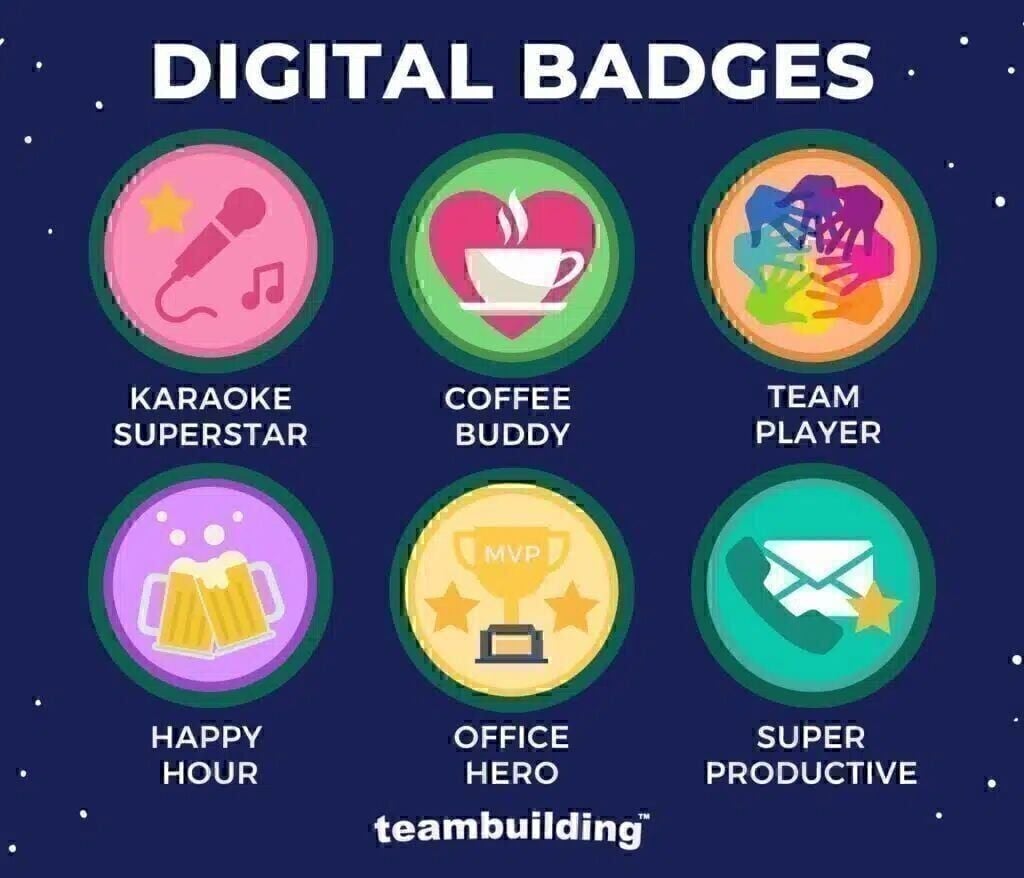
Attendees can display their badges on online profiles, such as social media pages, Slack profiles, or event passports.
While sitting in front of a computer screen may not capture the full majesty of nature, the activity is also not affected by the forces of nature. Camping out indoors does not involve packing, travel, bugs, animal invaders, or inclement weather, and is thus much easier to plan and enjoy than an in-person camping trip. Virtual campfires are fun ways to break up the normal remote team building routine, and encourage camaraderie and rapport-building between remote coworkers.
Next, check out our lists of drinking games to play on Zoom calls and virtual game night activities.
Here are answers to common questions about virtual campfires.
Virtual campfires are online socials that include traditional camp activities like ghost stories, singalongs, and s'mores making. Often, a virtual campfire video plays in the background during the event, and occasionally attendees light candles to set the atmosphere. The activities tend to be nature-themed, and the spirit of the occasion is togetherness and group bonding.
Some good virtual campfire ideas include sending s'mores kits, telling ghost stories, hosting singalongs, and online stargazing.
Remote campfires help to build rapport among distanced colleagues and promote camaraderie. These events bring a sense of novelty and nostalgia to online team building. The nature of virtual work tends to be independent and occasionally isolating, yet online bonfires emphasize a sense of community.
Comments (0)
Leave a Comment