
27 Large Group Activities for Adults (Hosted & DIY)
Large groups are not small groups with more chairs. Here are 27 activities that keep everyone playing, plus the hosted events we run at high headcounts.
Large groups are not small groups with more chairs. Here are 27 activities that keep everyone playing, plus the hosted events we run at high headcounts.
Most team building advice quietly assumes a group of twelve. Then someone hands you a roster of 60 names, or an all-hands agenda with 200 people in the room, and half of that advice stops working. The circle is too big to hear each other, the icebreaker that took eight minutes with one team takes forty, and a third of the room quietly checks out.
Large groups are not small groups with more chairs. They need different mechanics: parallel play instead of taking turns, teams instead of individuals, and a host or emcee who can hold a room.
We run these events for a living. teambuilding.com has hosted 45,000+ team building events across virtual and in-person formats since 2013 (as of September 2026), and our catalog now includes 190+ hosted Originals — 90+ of them in-person formats built to run in ballrooms, parks, breakout rooms, and conference halls. We have hosted events for teams at Google, Amazon, Microsoft, Apple, Meta, Cisco, and dozens of other organizations that book us 15 or more times each.
Trusted by teams at






This guide covers both sides of the problem: the hosted events you can book when you do not want to run a 200-person activity yourself, and the free activities our hosts use that genuinely scale. This list includes:
Let's get into it.
Large group activities are games, challenges, and events designed to keep everyone participating when the group is too big for a single conversation, usually 25 people or more. Examples include Rock Paper Scissors tournaments, team trivia nights, field days, cook-offs, and hosted game shows. The defining constraint is participation: a good large group activity gives every person something to do in the same minute, rather than making 40 people watch while two take a turn. These activities are also called "big group activities," "activities for large groups," "group activities for adults," and "large group team building activities."
Large group activities are what team building activities become once you scale them up, and they are the practical half of team building for large groups. They are similar to large group games, large group icebreakers, and fun group activities, and they are the backbone of most company offsites, all-hands days, and annual conferences.
How big is "large"? Across 23,000+ confirmed bookings on our platform, the median team building event has 16 participants, and half of all events land between 10 and 27 people. Our host team's working rule is that about 15 people is the dividing line: below it, an event can run personal and high-touch with many short rounds, and above it you need structured hosting, breakout teams, polls, and fewer but longer rounds so that everyone actually gets to play.
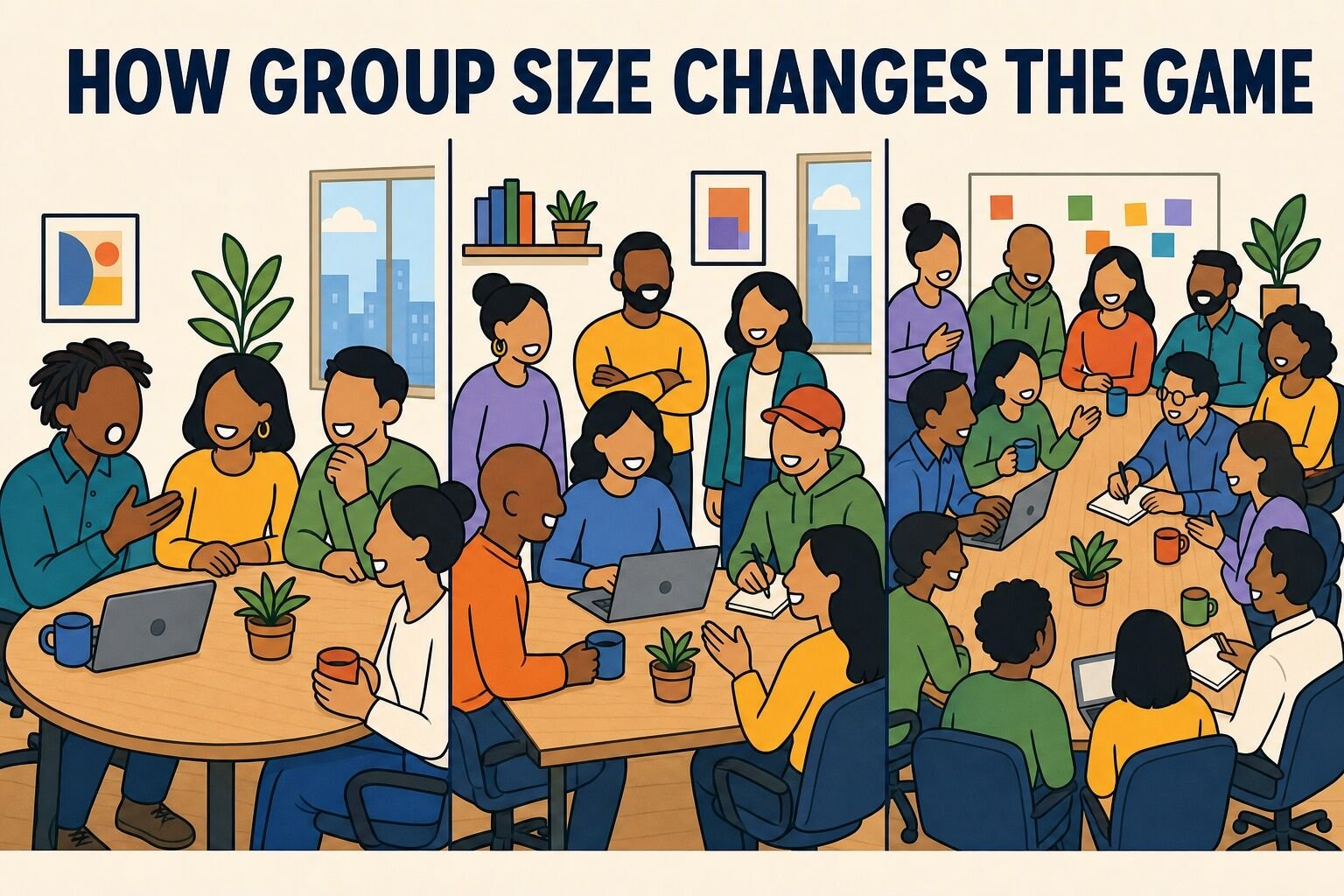
The good news is that bigger groups are not a compromise. A meta-analysis in Small Group Research by Klein, DiazGranados, Salas and colleagues, covering 60 effect sizes, found that team building has a moderate positive effect on team outcomes overall (r = .31), with the strongest results on affective and process outcomes (r = .44 each) — and larger teams benefited most (r = .66). Worth noting: the same analysis did not find a significant direct effect on team performance, so the gains flow through how people feel and how they work together, not through a straight line to output.
Calling any single activity "the best" is mostly opinion, so we ground the ranking in data. Our Team Building Score combines overall satisfaction, participant recommendation scores, organizer reviews, engagement ratings, and other post-event feedback from more than 50,000 post-event surveys, and we publish exactly how it is calculated.
The events below all scale well past 30 participants, and the list includes both in-person and virtual formats, because plenty of "large group" now means three offices on a video call.
| # | Event | Score | Rating | Happier | Connected | NPS | Price |
|---|---|---|---|---|---|---|---|
| 1 | 
Ultimate Game Show
Best for: Teams seeking fun competition
More about this eventCompete in fan favorites like Coworker Feud & Price Hike.
Perfect for: Teams seeking fun competition, Fans of classic game shows, Groups wanting team bonding |
248 | ★ | 98% | 93% | 86 | $45 pp |
| 2 | 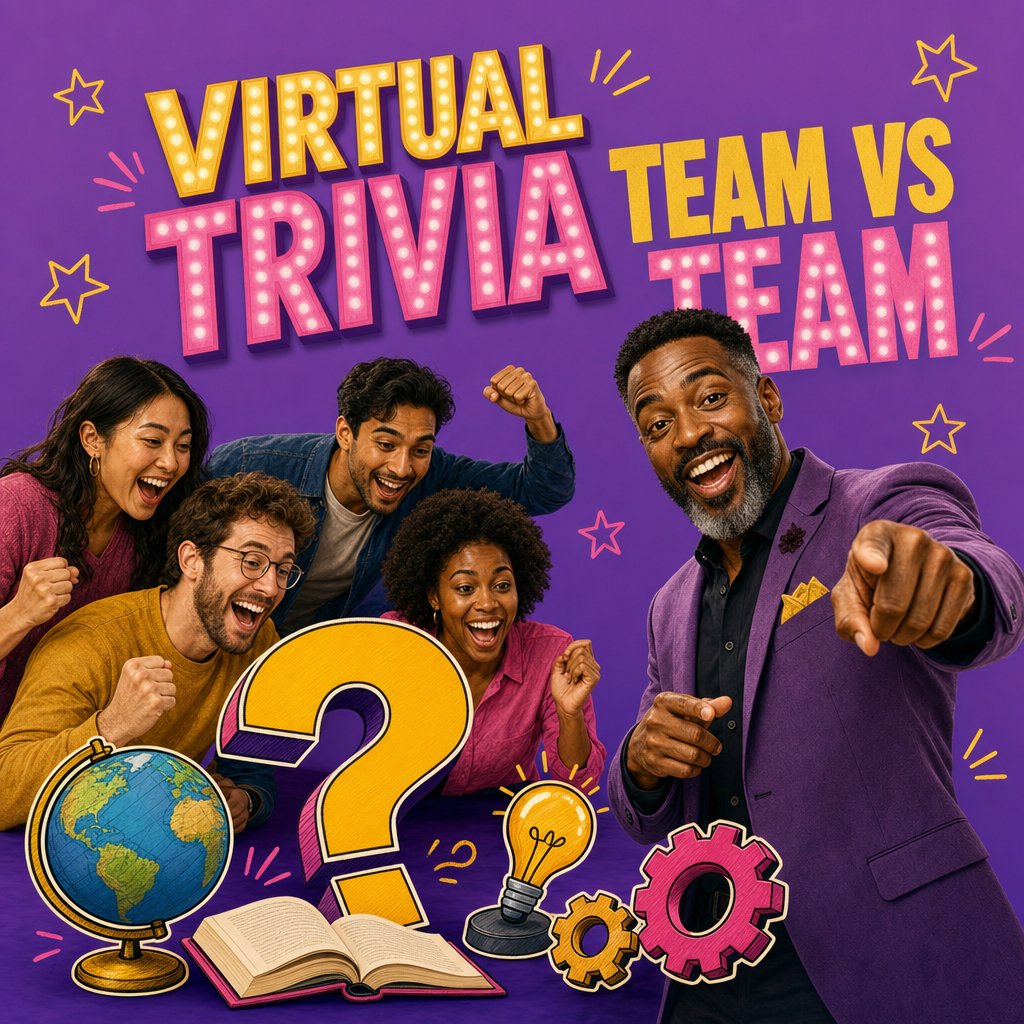
Virtual Trivia: Team vs Team
Best for: Virtual happy hours
More about this eventChoose your trivia theme and let the friendly competition begin!
Perfect for: Virtual happy hours, Conference entertainment, Teams seeking fun competition |
245 | ★ | 97% | 90% | 82 | $30 pp |
| 3 | 
Online Office Games
Best for: Remote teams seeking fun
More about this eventA triathlon of virtual activities with 150,000+ participants to date.
Perfect for: Remote teams seeking fun, Boosting team morale, Virtual team celebrations |
245 | ★ | 98% | 93% | 81 | $40 pp |
| 4 | 
Murder in Ancient Egypt
Best for: Teams seeking a thrilling challenge
More about this eventWork together on puzzles & solve a real (ancient) murder mystery.
Perfect for: Teams seeking a thrilling challenge, Improving problem-solving skills, Virtual team building events |
245 | ★ | 96% | 90% | 73 | $45 pp |
| 5 | 
The Great Guac Off™
Best for: Teams seeking fun competition
More about this eventThe world's #1 guacamole-making competition for team building.
Perfect for: Teams seeking fun competition, Building camaraderie through cooking, Celebrating team milestones |
222 | ★ | 98% | 96% | 86 | $80 pp |
| 6 | 
Virtual Holiday Party
Best for: Teams seeking light competition
More about this eventThe world's #1 virtual holiday party since 2020.
Perfect for: Teams seeking light competition, Remote holiday celebrations, Fast-paced team bonding |
218 | ★ | 98% | 91% | 80 | $40 pp |
| 7 | 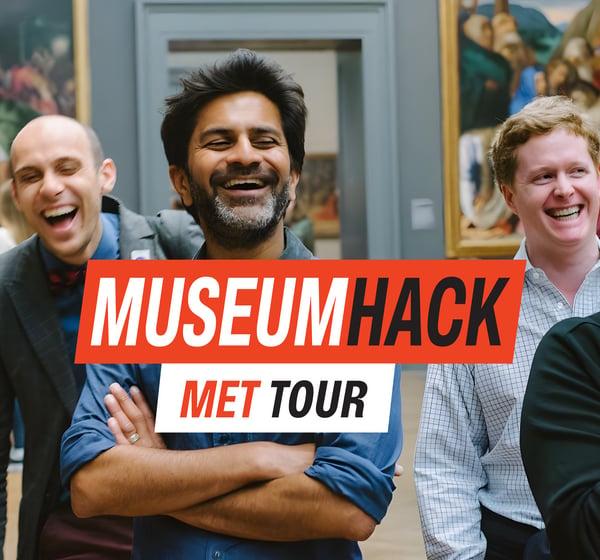
Museum Hack Tour: Metropolitan Museum of Art
Best for: Teams seeking a creative adventure
More about this eventA wildly entertaining guided-tour of the Metropolitan Museum of Art.
Perfect for: Teams seeking a creative adventure, Groups interested in art and history, Celebrating a successful project completion |
218 | ★ | 100% | 95% | 90 | $100 pp |
| 8 | 
The Art of Storytelling Workshop
Best for: Teams seeking better communication
More about this eventLearn to tell better stories in a professional (and fun) workshop.
Perfect for: Teams seeking better communication, Groups wanting to enhance creativity, Organizations aiming for deeper connections |
215 | ★ | 97% | 96% | 89 | $100 pp |
| 9 | 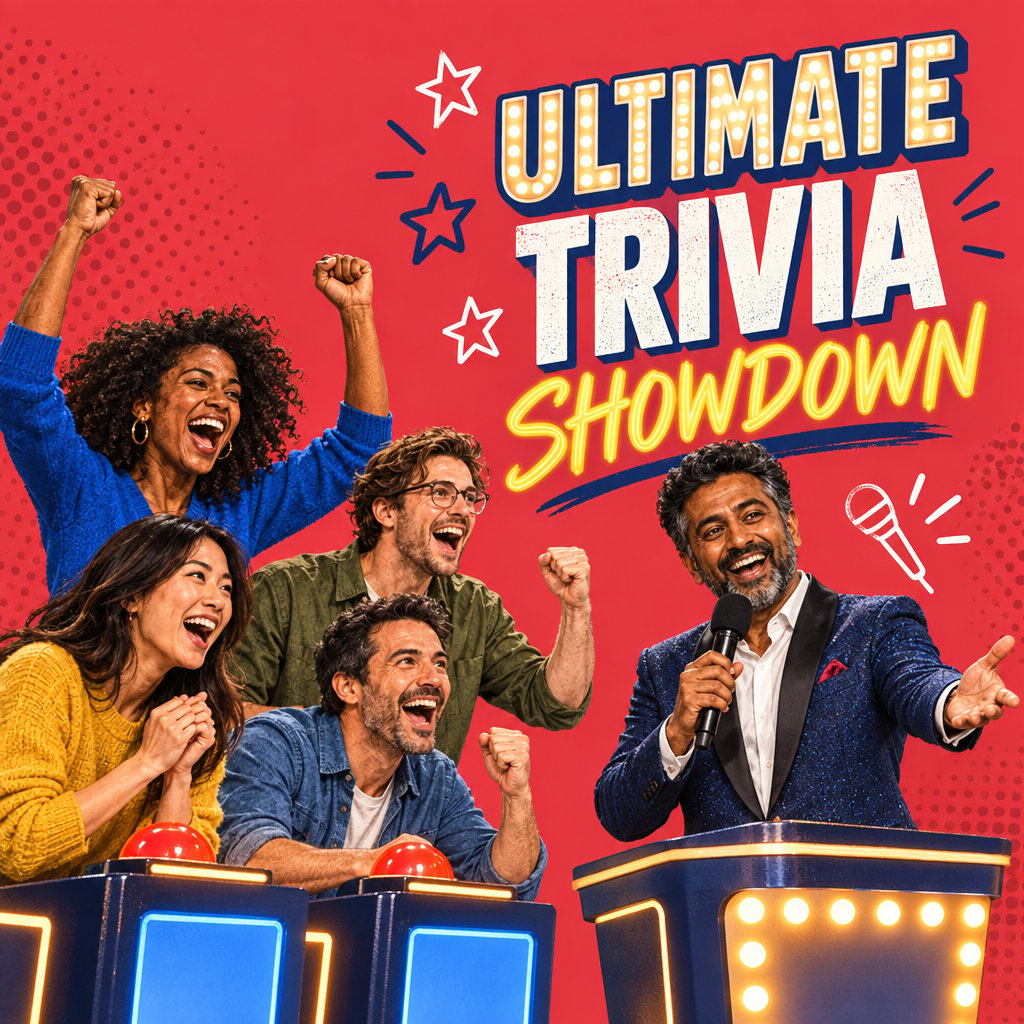
Ultimate Trivia Showdown
Best for: Teams seeking friendly competition
More about this eventA hosted mashup of classic trivia challenges we bring to your space.
Perfect for: Teams seeking friendly competition, Strengthening employee bonds, In-person team-building events |
215 | ★ | 99% | 96% | 90 | $50 pp |
| 10 | 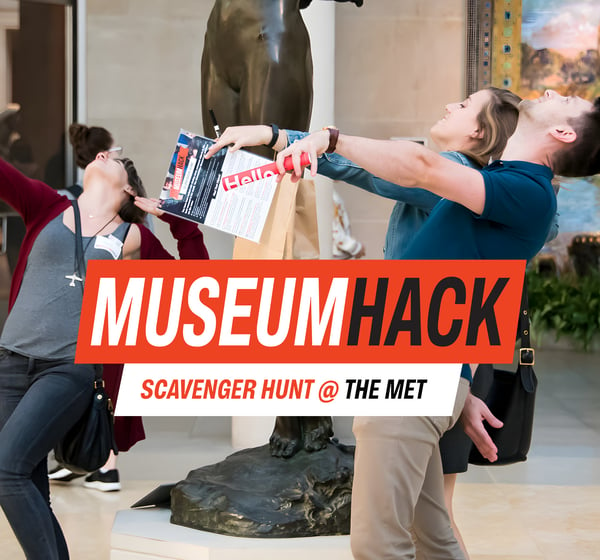
Museum Hack Scavenger Hunt at The Metropolitan Museum of Art
Best for: Art-loving teams seeking adventure
More about this eventExperience NYC's The Met in a fresh and unexpected way.
Perfect for: Art-loving teams seeking adventure, Teams building communication skills, Cultural enthusiasts looking for fun |
215 | ★ | 98% | 96% | 85 | $100 pp |
| 11 | 
Ultimate Holiday Game Show
Best for: Teams seeking festive fun
More about this eventYour favorite game show but with a holiday spin.
Perfect for: Teams seeking festive fun, Holiday celebrations with colleagues, Groups craving friendly competition |
200 | ★ | 98% | 92% | 83 | $40 pp |
| 12 | 
Espionage!
Best for: Teams seeking a thrilling challenge
More about this eventA social deduction game with puzzles, challenges and sabotage.
Perfect for: Teams seeking a thrilling challenge, Groups wanting to enhance problem-solving, Building trust under pressure |
194 | ★ | 94% | 89% | 81 | $60 pp |
Ranked by our Team Building Score — a running points total earned through confirmed bookings, verified reviews, ratings, and listing quality, recalculated nightly. Every event shown also has at least 30 post-event survey responses per question; the happier, connected, and NPS columns are computed from the 7,877+ survey responses collected for the 12 events listed here — a subset of all post-event surveys across our catalog. Updated October 2026.
Want the full catalog? Browse every event built for large groups →
Two of these come up constantly when planners have a big headcount and a real venue.

An updated take on the childhood classic that gets your team to enjoy friendly outdoor competition.
Field Day is our outdoor competition format, and it is the rare hosted event with a high minimum rather than a low one: it starts at 32 participants and runs up to 1,000. A facilitator brings the equipment to your park, field, or campus lawn and runs 90 minutes of relay races, tug-of-war style challenges, and playground classics with a scoreboard attached. Teams rotate through stations, so 200 people are never waiting in one line.
It is the closest thing we offer to a company-wide field day, with the planning, gear, and refereeing handled for you.
Experience NYC's The Met in a fresh and unexpected way.
The Museum Hack Scavenger Hunt splits a group into small teams that race through the Met solving clues, hunting down specific artworks, and staging photo challenges, with a host who knows which stories actually land. Museums are one of the best venues for a large group because the building does the crowd management for you: teams spread across galleries, then reconvene for scoring.
There are a lot of companies selling group activities, and a lot of them are really one venue with a sales page. For a large group, the questions that matter are narrow: can they staff enough hosts, can they run parallel teams, and have they done your headcount before? Here are the providers we would actually consider, including our own.
| Company | Type | Typical price | Best for | Our take |
|---|---|---|---|---|
| teambuilding.com | Team building company | $25–$100 per person, in-person; $20–$45 virtual | Hosted events for 30 to 1,000+ people, in person or online | Our pick, and we are obviously biased. Our Originals are refined against post-event surveys, most hosts are employees rather than subcontractors, and formats like Field Day and Conference Energizers are designed for high headcounts rather than stretched to fit them. |
| Confetti | Experiences marketplace | ~$20–$50 per person, priced live on their site | Teams that want a wide selection and instant pricing | The strongest marketplace alternative, with a broad catalog of games, classes, and workshops. Leans virtual and leans short — think energizer rather than a full offsite centerpiece. |
| TeamBonding | Team building company | Custom quotes | Large corporate programs with charity or CSR components | Decades in the industry and a deep catalog of in-person programs, including build-a-bike style charity events that work well at conference scale. |
| The Go Game (Weve) | Team building company | Custom quotes | Highly produced, game-show-style events with an emcee | Strong production values for big rooms and stages. Limited public review volume, but consistently well rated. |
| Outback Team Building | Team building company | Custom quotes | Traveling facilitators for multi-city or roadshow events | A broad North American footprint and a catalog of classic formats like charity bike builds and city scavenger hunts. |
Booking a host is the fastest route for a big group, but it is not the only one. Everything below is free or close to it, and every activity here comes out of formats our hosts run.
These 27 activities are organized by setting: crowd-proof basics first, then party games, indoor options, outdoor outings, and formats built for work events. Every one of them has been chosen because it scales — no taking turns around a circle of 80.
| Activity | Best for | Group size | Time | Cost |
|---|---|---|---|---|
| Rock Paper Scissors Tournament | Instant energy | 20–500+ | 10 min | Free |
| Bet on the Crowd | Getting to know the room | 20–200 | 15–30 min | Free |
| Lightning Scavenger Hunts | Waking up a flat room | 15–300 | 10–20 min | Free |
| Human Bingo | Mixing departments | 20–150 | 20–30 min | Free (printing) |
| Would You Rather, Live | Participation with zero prep | 25–1,000+ | 5–15 min | Free |
| Speed Mixer Rounds | New hires and cross-team intros | 20–120 | 20–40 min | Free |
| Family Feud | Big-room entertainment | 30–300 | 30–45 min | Free |
| Trivia Night: Team vs Team | Tables of mixed teams | 20–200 | 45–60 min | Free |
| Fishbowl | Laughter with almost no prep | 15–60 | 20–30 min | Free |
| Name That Tune | Party energy | 20–200 | 20–30 min | Free (speaker) |
| Minute to Win It Stations | Rotating crowds | 20–150 | 30–60 min | $20–$50 supplies |
| Escape Room Stations | Problem solving indoors | 20–100 | 45–60 min | $30–$75 supplies |
| Board Game Tournament | Low-key socializing | 16–80 | 60–90 min | Free if you borrow games |
| Perfect Square | Communication under pressure | 16–100 | 20–30 min | Rope and blindfolds |
| Egg Drop Challenge | Creative problem solving | 16–120 | 30–45 min | $20–$40 supplies |
| Drawing Telephone | Guaranteed laughs | 12–100 | 20–30 min | Paper and pens |
| Office Olympics | Whole-company competition | 30–300 | 2–3 hours | $50–$200 gear |
| Company Picnic or Barbecue | Big headcounts and families | 30–500 | 3–4 hours | Catering budget |
| Photo Scavenger Hunt | Exploring a new city | 20–200 | 60–90 min | Free |
| Bowling Party | Mixed ages and abilities | 20–120 | 2 hours | $20–$35 per person |
| Paintball or Laser Tag | Competitive crowds | 20–100 | 2–3 hours | $25–$50 per person |
| Group Hike or Park Day | Low-cost offsites | 15–100 | Half day | Free |
| Conference Energizers | Breaking up long agendas | 50–1,000+ | 5–10 min each | Free |
| Team Cook-Off | Offsites and celebrations | 20–150 | 60–90 min | Ingredients |
| Charity Build Challenge | Purpose-driven groups | 25–500 | 60–90 min | Materials budget |
| Team Awards Ceremony | Closing an offsite | 20–300 | 20–30 min | Printing |
| Human Mosaic Photo | Groups of 100 or more | 100–1,000+ | 15–20 min | Free |
This is the single most reliable way we know to get a big room loud in under ten minutes, and it needs nothing but people.
To play:
The last match is the point. With 200 people, the two finalists are playing in front of 198 screaming fans, which is far more fun than the game deserves to be.
Best for: Kicking off an all-hands or breaking up a long agenda
Time: 10 minutes
Materials (cost): None (free)
What we've learned: Say the cheering rule twice before you start, and demonstrate it with one volunteer. Groups that skip the demo end up with half the room sitting down after their first loss, and the whole mechanic collapses.
Bet on the Crowd is part trivia, part social experiment, and it is one of our favorite formats for a group that does not know each other well. Instead of testing obscure facts, players predict what their colleagues said.
To play:
Best for: Groups that mix departments or offices
Time: 15 to 30 minutes
Materials (cost): A free survey tool and a way to show results (free)
What we've learned: Close votes are the fun ones. A 52/48 split creates genuine argument at every table; a 95/5 split gets a shrug. When you write the survey, aim for questions your group will actually be divided on, and throw in two or three that reveal something specific about your company.
A scavenger hunt does not need a venue or a map. In our events, the fastest version is a single clue at a time, with everyone racing at once.
To play:
Need clues? Our generator writes them for you:
Best for: Reviving a room after lunch or a long session
Time: 10 to 20 minutes
Materials (cost): None (free)
What we've learned: Do not rush to the next clue. When someone comes back holding a hundred-year-old pocket watch or a souvenir from a strange trip, stop and ask about it. The race generates the energy, but the stories are what people remember.
Human Bingo turns a room full of strangers into a scavenger hunt where the prizes are people. It is the most efficient mixer we know for groups of 50 or more.
To play:
Best for: Conference openers, onboarding cohorts, merged teams
Time: 20 to 30 minutes
Materials (cost): Printed cards and pens (free to a few dollars)
What we've learned: The squares are the whole game. Prompts everyone can already answer about each other produce a fast, boring card. Write squares that require a real conversation, and the room will still be talking about them at dinner.
This one works at literally any size, including a thousand people in an auditorium, because voting is physical instead of verbal.
To play:
Pull prompts from our generator so you are not writing them at midnight:
Best for: Auditoriums, ballrooms, and any room where people cannot all hear each other
Time: 5 to 15 minutes
Materials (cost): A microphone (free)
What we've learned: The movement matters more than the questions. Standing up resets attention in a way that a show of hands never does, which is why we use this format between longer sessions rather than at the very start.
Speed networking, done well, is the highest-yield thing you can do with a big group of people who do not know each other. The trick is structure: short rounds, a prompt for each one, and a hard stop.
To run it:
Our list of icebreaker questions has enough prompts for a dozen rounds.
Best for: Onboarding groups, conferences, newly merged teams
Time: 20 to 40 minutes
Materials (cost): Chairs and a timer (free)
What we've learned: Three minutes feels aggressive and is exactly right. People stay energized when the round ends while the conversation is still good, and the unstructured block at the end is where the real connections get made.
These are the games we reach for at holiday parties, celebration dinners, and any event where the group has already had a drink and nobody wants to hear the word "exercise."
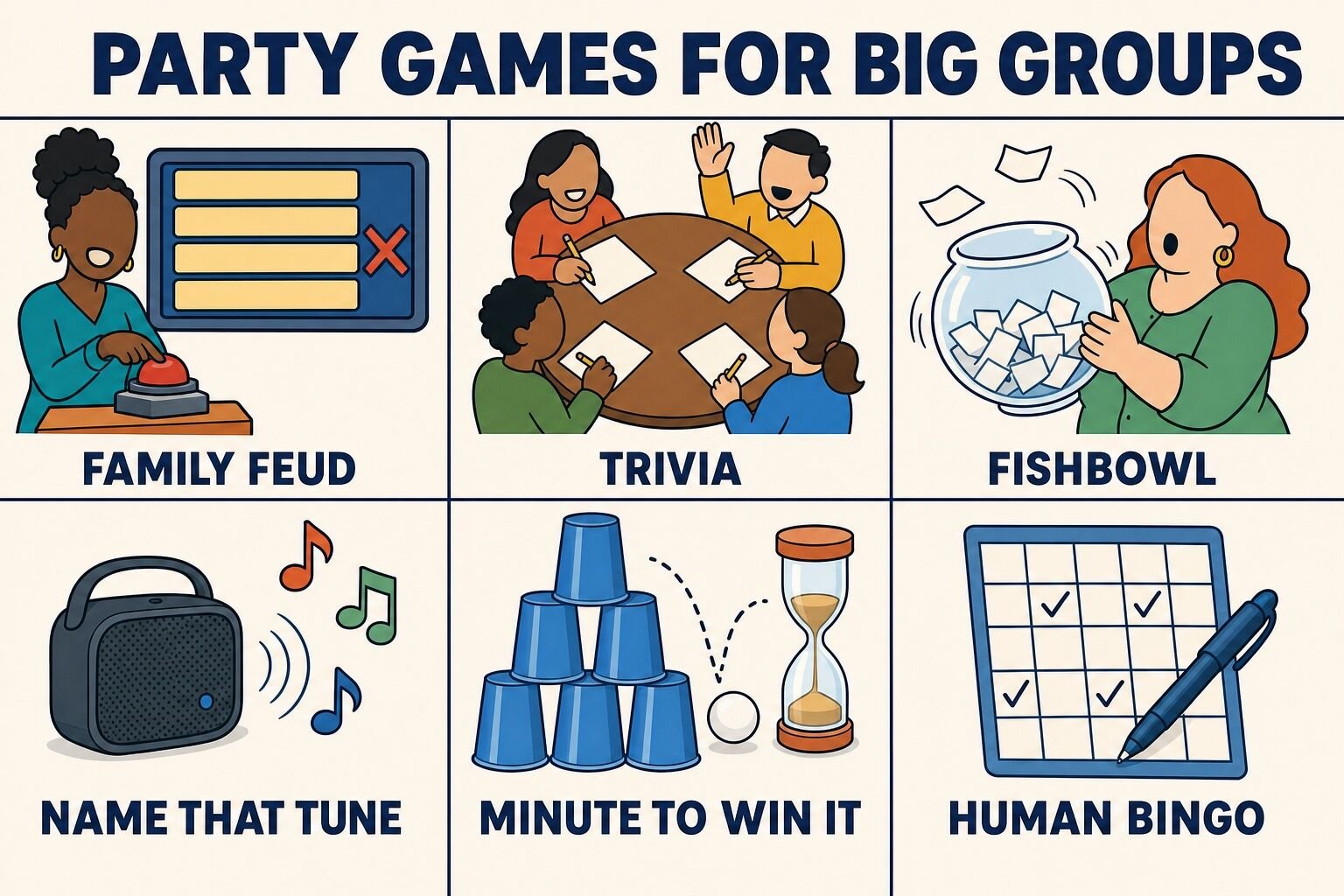
The survey-says format is the best big-room game ever invented, because the audience plays along whether they are on stage or not.
To play:
Best for: Holiday parties and all-hands entertainment
Time: 30 to 45 minutes
Materials (cost): A survey tool, slides, and something to use as a buzzer (free)
What we've learned: Use company-specific questions for at least half the board. Generic survey questions play fine; questions about your own office get the biggest reaction, because the top answer is always someone everyone recognizes.
Trivia is the default large group activity for a reason. It scales by adding tables rather than adding time, and a room of 200 takes exactly as long as a room of 20.
To run it:
Our generator will fill a round in seconds:
For more question sets, see our list of trivia questions.
Best for: Dinners, offsites, and anywhere with tables
Time: 45 to 60 minutes
Materials (cost): Answer sheets and pens (free)
What we've learned: Put one round in the middle that has nothing to do with knowledge — a music round, a logo round, a "guess the baby photo" round. It resets the energy and gives the tables that are losing on facts a chance to climb back in.
Fishbowl is three games in one, played with the same slips of paper, and it gets funnier with each round because everyone already knows the answers.
To play:
For groups above 30, split into several fishbowls running in parallel and compare scores at the end. If your crowd loves this one, our improv games are the natural next step.
Best for: Rooms with tables and a bit of noise tolerance
Time: 20 to 30 minutes
Materials (cost): Paper, pens, a bowl (free)
A music round played across the whole room is the cheapest crowd-pleaser on this list.
To play:
Best for: Parties, mixed-age groups, anyone tired of trivia
Time: 20 to 30 minutes
Materials (cost): A speaker and a playlist (free)
What we've learned: Spread the decades deliberately. A playlist that skews to one era quietly tells a chunk of the room that this game is not for them, and you will see it in the scores.
One-minute challenges are ideal for large groups because you can run eight of them at once. Instead of a single stage, build stations and rotate.
To run it:
See our minute to win it games for challenge ideas that need almost no equipment.
Best for: Big rooms where you need parallel play
Time: 30 to 60 minutes
Materials (cost): Cups, ping-pong balls, tape, snacks ($20 to $50)
What we've learned: Assign one person per station as a permanent referee rather than rotating everyone. Consistent judging prevents the arguments that otherwise eat ten minutes at the scoring table.
When the group is inside and the weather is not negotiable, you need activities that work in a conference room, a cafeteria, or a hotel ballroom. These five do. For smaller rooms, our indoor group games list has more options.
Booking one escape room for 60 people does not work. Building your own does, because you can run every team at once.
To run it:
Best for: Problem-solving groups and offsite afternoons
Time: 45 to 60 minutes
Materials (cost): Locks, boxes, printed puzzles ($30 to $75)
What we've learned: Build one more puzzle than you think you need and make it optional. Fast teams finish early, get bored, and start helping other teams, which quietly ruins the ending for everyone.
A tournament structure turns a pile of board games into an event with a winner, which is the difference between "people played games" and "people are still talking about it."
To run it:
Our list of team building board games has good picks that work at this pace.
Best for: Rainy-day offsites and quieter groups
Time: 60 to 90 minutes
Materials (cost): Borrowed games (free)
What we've learned: Ban the long games. One table playing a three-hour strategy game while everyone else rotates every fifteen minutes will hold the tournament hostage.
Perfect Square is a communication exercise that becomes a spectator sport once you run several teams at once.
To play:
With multiple teams, the comparison is the fun part: one square is nearly perfect, one is a triangle, and everyone has a theory about why. For more exercises in this vein, see our communication games.
Best for: Groups that need a reason to talk about how they communicate
Time: 20 to 30 minutes
Materials (cost): Rope and blindfolds per team (about $15 per team)
What we've learned: The debrief is where the value is. Ask each team who ended up leading and whether anyone appointed them. The answer is almost always "no," and that is the conversation worth having.
The egg drop is a classic because the outcome is undeniable: the egg breaks or it does not, in front of everyone.
To play:
Best for: Engineering-minded groups and mixed-department teams
Time: 30 to 45 minutes
Materials (cost): Craft supplies and eggs ($20 to $40)
What we've learned: Run the elimination rounds rather than a single drop. Escalating heights keeps the whole room watching and turns a five-minute reveal into the highlight of the afternoon.
Drawing Telephone is the paper version of a broken message, and it produces the loudest laughs of any activity on this list for the least preparation.
To play:
Best for: Tables of any size, running in parallel
Time: 20 to 30 minutes
Materials (cost): Paper and pens (free)
What we've learned: Give people 45 seconds per turn, not 90. Tight timing produces worse drawings, and worse drawings are the entire point.
Outside is where big groups stop feeling crowded. These six work for anything from a 30-person team day to a 500-person company picnic. For more options, see our full list of outdoor team building activities.
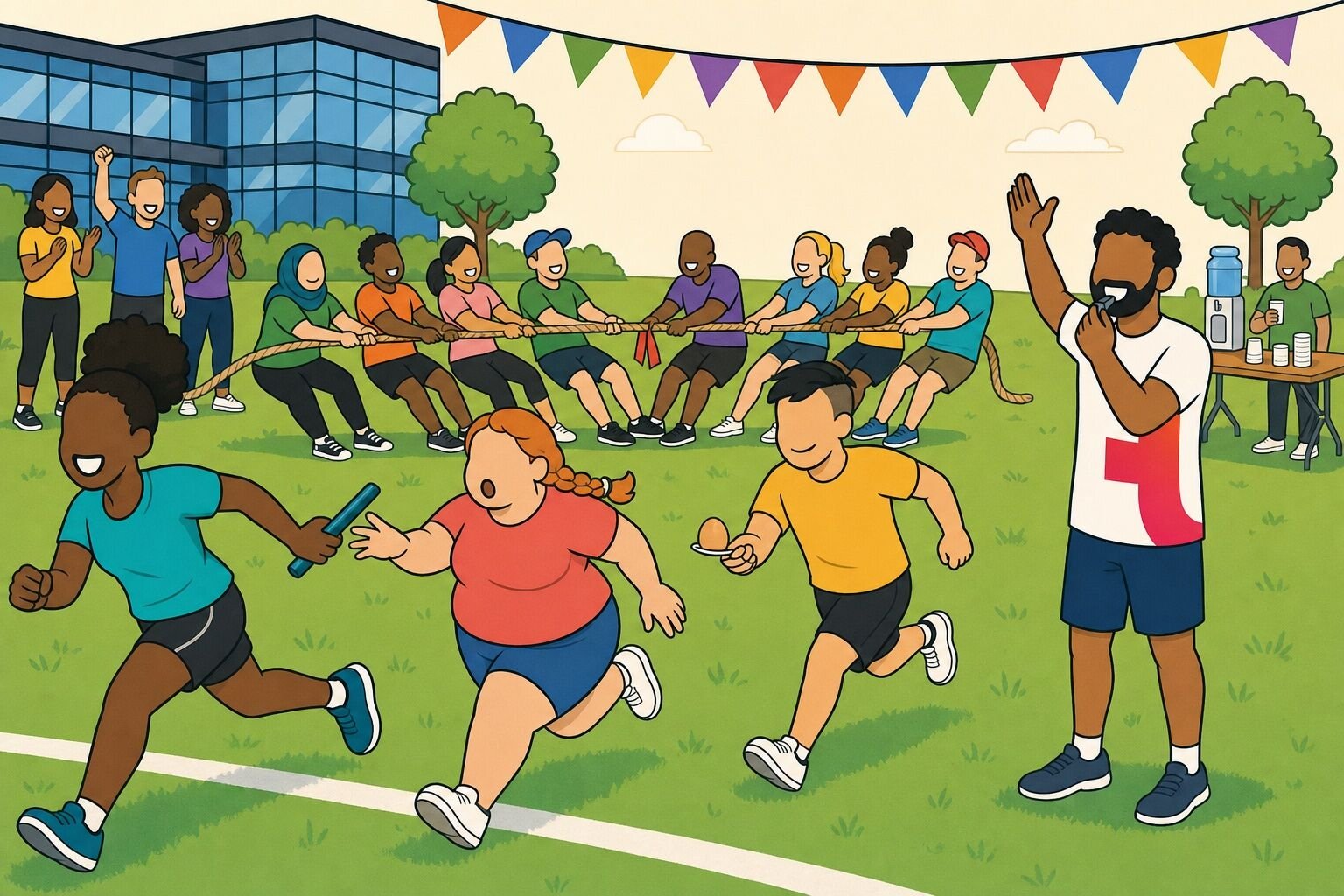
A full field day is the most reliable way to occupy a very large group outdoors, and the event structure does the work for you.
To run it:
Our office Olympics ideas list has more event formats. If you would rather not referee it yourself, our hosted Field Day runs the same structure with facilitators and equipment included.
Best for: Company-wide events with 30 to 300 people
Time: 2 to 3 hours
Materials (cost): Cones, balloons, batons, medals ($50 to $200)
What we've learned: Mix the teams across departments and seniority before anyone arrives. Teams that self-select rebuild the org chart on the field, and the day ends with the same people talking to each other that already talk every day.
A picnic is the most forgiving format for a giant headcount, because people can arrive, eat, drift, and play at their own pace.
To plan one:
See our company picnic ideas for games and logistics.
Best for: Annual events, family days, and summer celebrations
Time: 3 to 4 hours
Materials (cost): Catering and permits (varies)
What we've learned: Optional activity zones beat one mandatory schedule. At this size, roughly a third of the group wants to compete, a third wants to eat and talk, and a third is chasing a toddler. A single agenda serves exactly one of those groups.
A photo hunt turns any neighborhood into a game board, which makes it ideal when a large group lands in an unfamiliar city for a conference.
To run it:
Our scavenger hunt ideas list has more clue formats.
Best for: Conferences, offsites, and city-based teams
Time: 60 to 90 minutes
Materials (cost): Phones (free)
What we've learned: Score creativity, not speed. When the only prize is for finishing first, teams sprint past the interesting challenges, and the photo review at the end has nothing worth watching.
Bowling is the rare outing that works across every age and fitness level, and most alleys can take a very large group if you book the whole venue.
To organize it:
Best for: Mixed groups and evening events
Time: About 2 hours
Materials (cost): $20 to $35 per person
Competitive, physical, and genuinely memorable — with the caveat that this one has to be optional.
To organize it:
Best for: Competitive teams with a mostly-willing crowd
Time: 2 to 3 hours
Materials (cost): $25 to $50 per person
What we've learned: Laser tag gets far higher participation than paintball for the same group. Paintball hurts, and the people who decline are disproportionately the ones who were already least likely to join a team event.
A hike is the cheapest large group activity that still feels like a real outing, and conversation happens naturally because people fall into pairs on the trail.
To organize it:
If your group is closer to the water than the mountains, our beach party ideas work the same way.
Best for: Budget offsites and outdoorsy teams
Time: Half a day
Materials (cost): Water and snacks (free to low)
What we've learned: Publish the difficulty honestly and offer the short route without ceremony. One unexpectedly steep mile is all it takes to turn a team day into an experience a few people quietly resent.
These are the formats we run most often for company meetings, conferences, and annual gatherings, where the group is large, the agenda is full, and the activity has to earn its slot. For ongoing programs rather than one-off events, see our employee engagement activities.
The most valuable large group activity at a conference is often five minutes long. After a 45-minute session, attention is gone, and the next speaker inherits a dead room.
To run them:
We run this as a hosted format too: Conference Energizers starts at 30 participants and scales to a full ballroom.
Best for: Conferences, summits, and multi-hour all-hands meetings
Time: 5 to 10 minutes each
Materials (cost): A microphone (free)
What we've learned: Energizers work best immediately after the lowest-energy moment of the agenda, not at the start of the day. The room does not need waking up at 9 a.m.; it needs it at 2 p.m.
A cook-off gives a large group a job, a deadline, and something to eat at the end, which is a hard combination to beat.
To run it:
Our hosted version, The Great Guac Off, runs the same structure with ingredients, aprons, and a facilitator brought to your venue.
Best for: Offsites, celebrations, and groups that need a reason to mix
Time: 60 to 90 minutes
Materials (cost): Ingredients and serving supplies (varies)
What we've learned: The presentation round matters more than the cooking. Making each team name their dish and pitch it in 60 seconds is what turns a food activity into a team activity.
Give-back activities scale unusually well, because the work is naturally parallel: 300 people can assemble 300 kits at the same time.
To run it:
We run a hosted version, Paws for a Cause, where teams make blankets for animal rescues.
Best for: Conferences, annual meetings, and purpose-driven groups
Time: 60 to 90 minutes
Materials (cost): Donation materials (varies)
What we've learned: Name the recipient specifically. "We are making 400 blankets for a shelter in this city" lands very differently than "we are giving back," and the difference shows up in how hard people work.
An awards ceremony is the best closing activity we know for a large group, because it makes the day's shared experiences official.
To run it:
For year-round versions of this, see our employee appreciation ideas.
Best for: The last 30 minutes of an offsite or company event
Time: 20 to 30 minutes
Materials (cost): Certificates or novelty trophies (low)
What we've learned: Reference moments from the day itself. Awards written in advance feel like a corporate script; awards written during lunch about something that happened that morning get the biggest reaction of the entire event.
This one only works with a large group, which is exactly why it belongs here. The whole company arranges itself into a shape — a logo, a number, a word — and one photo from above becomes the artifact of the day.
To run it:
Best for: Conferences, anniversaries, and company-wide gatherings of 100+
Time: 15 to 20 minutes
Materials (cost): Chalk or tape and colored items (low)
What we've learned: Mark the outline in advance and it takes ten minutes. Try to direct 300 people into a shape from scratch and it takes forty, and the photo is not better for the wait.
We have run tens of thousands of events across both formats, and large groups fail and succeed in predictable ways. Here is what the data and our hosts agree on.
Big does not mean impersonal. The median virtual event on our platform is a team of 16, but we have hosted 448 virtual events with 100 or more participants, the largest with over 1,000 attendees. The intimacy people worry about losing at that size gets replaced by something else worth having: the energy of an entire company playing the same game at the same moment.
The host is the whole ballgame at scale. With twelve people, a group can self-organize. With 120, someone has to hold the room, explain the rules in two sentences, keep time, and make the quiet tables feel included. This is the single biggest difference between a large event people remember and one they endure.
Parallel beats sequential, always. The fastest way to lose a large group is an activity where people take turns. Anything that has every team playing simultaneously — stations, tables, breakouts, heats — will hold attention roughly as well at 200 people as it does at 20.
Schedule it like everyone else does, because it works. Across 22,000+ events on our platform, Thursday is the most popular day for team building (28% of events), and most events start between 2 p.m. and 4 p.m. local time. In-person events peak on Tuesdays instead. Mid-afternoon works because it borrows from the least productive block of the day, and a Tuesday or Thursday avoids both the Monday scramble and the Friday exodus.
| Group size | What changes | What to run |
|---|---|---|
| Under 15 | Everyone can hear each other. Taking turns is still practical, and one conversation can include the whole room. | Discussion games, icebreaker games, short rounds, anything that rewards personal stories. |
| 15 to 40 | One conversation stops working. You need a host, and quiet people start disappearing. | Trivia, Drawing Telephone, Speed Mixer Rounds — teams of six to eight running in parallel. |
| 40 to 100 | Logistics become the constraint: sightlines, sound, and how long it takes to explain anything. | Minute to Win It Stations, Escape Room Stations, Family Feud, a hosted event with multiple facilitators. |
| 100 to 300 | You are producing a show, not running a game. Anything requiring individual attention is out. | Office Olympics, Would You Rather, Live, Charity Build Challenge, picnics. |
| 300+ | Every minute of instruction costs a person-week of attention. Simplicity wins outright. | Conference Energizers, Rock Paper Scissors Tournament, Human Mosaic Photo, staged game shows. |
If your large group is spread across offices or time zones, the same principles apply on a video call — see our list of virtual group activities for formats built for that.
Some staples of team building get worse as the group grows, and a few of them we have watched fail in person. These are the ones to skip when the headcount is high.
| Activity | Why skip it | Verdict |
|---|---|---|
| Round-robin introductions | Going around the room takes 40 minutes with 60 people, and nobody remembers anything past the fifth name. Use a mixer like Human Bingo instead. | Skip it |
| Trust falls | The exercise asks for physical trust between people who may not have met, carries a genuine injury risk at scale, and teaches nothing that a real collaborative challenge does not teach better. | Skip it |
| Human Knot | It is fine with eight people and unworkable with eighty. Big versions either take forever or split into small knots that finish at wildly different times. | Usually skip |
| Mandatory karaoke or talent shows | Putting employees on a stage in front of hundreds of colleagues creates anxiety rather than connection, especially when opting out is visible to everyone. | Skip it |
| One escape room for the whole company | Escape rooms cap at six to ten players. A group of 60 means most people wait in a lobby. Run Escape Room Stations instead so every team plays at once. | Doesn't scale |
| A motivational speaker billed as team building | A good speaker is worth booking, but the audience is passive and nobody interacts with anyone. It is entertainment, not team building. | Not team building |
| An open bar with no structure | Large unstructured mixers reliably fragment into the same cliques that already exist, and the people you most wanted to include leave first. | Add structure |
Large groups are not harder to entertain than small ones. They are just less forgiving. An activity with a slow setup, a single point of attention, or a turn-taking structure will expose itself immediately at 100 people, while the same activity might survive with twelve.
Pick formats that run in parallel, assign teams before people arrive, keep instructions to two sentences, and give the day one clear peak. That is most of the job.
If you would rather hand the whole thing to someone else, browse the events we host for large groups — every one of them has been run at high headcounts, repeatedly, with the scores to show for it.
Next, check out our lists of team building games, party games for work, and social activities for adults.
Common questions about planning activities for large groups of adults.
In practice, a group becomes "large" somewhere around 25 people, though the mechanics start changing earlier than that. Our host team's working rule is that about 15 people is the dividing line: below it, an activity can run personal and high-touch with many short rounds, and above it you need structured hosting, teams or breakout groups, and fewer but longer rounds so everyone participates. For reference, the median team building event booked on teambuilding.com has 16 participants, and half of all events fall between 10 and 27 people.
The best large group activities are the ones where every person is playing in the same minute rather than taking turns. Reliable picks include a Rock Paper Scissors tournament, team trivia with tables of six to eight, Minute to Win It stations, Family Feud, a company field day or Office Olympics, and a photo scavenger hunt. For hosted options, formats like Field Day and Conference Energizers are designed for high headcounts rather than stretched to fit them.
Plenty of the strongest options cost nothing. A Rock Paper Scissors tournament needs only people, Would You Rather works by having the room physically move to one side or the other, Lightning Scavenger Hunts use whatever is already in the building, Human Bingo needs a printed card, Drawing Telephone needs paper and pens, and Speed Mixer Rounds need chairs and a timer. All six scale from 20 people to several hundred.
Three things do most of the work. Run activities in parallel so no one is waiting for a turn. Assign teams in advance and mix them across departments, because self-selected teams rebuild the org chart. And give the group a host who can explain the rules in two sentences, keep time, and pull in the quiet tables. With twelve people a group can self-organize; with 120 someone has to hold the room.
Across 22,000+ events on teambuilding.com, Thursday is the most popular day for team building (28% of events), and most events start between 2 p.m. and 4 p.m. local time. In-person events peak on Tuesdays instead. Mid-afternoon works because it borrows from the least productive block of the day, and a Tuesday or Thursday avoids both the Monday scramble and the Friday exodus.
Hosted in-person events on teambuilding.com generally run $25 to $100 per person depending on the format and whether materials, venue entry, or catering are included, while hosted virtual events run about $20 to $45 per person. Competitors in the space more often quote custom pricing for large groups, so it is worth asking what the per-person number includes before comparing.
Comments (0)
Leave a Comment