Corporate Events: 30 Fun Ideas, Types & Examples (With Steps, Costs & a Planning Calendar)
30 fun corporate event ideas with steps, group sizes and costs, from office events and day outs to parties, large-group formats, and events for manufacturing teams, plus the types of corporate events with examples and the planning calendar we use ourselves.
Published
·
Updated
The best corporate events are rarely the expensive ones. A trivia night with one round about your own company, a city scavenger hunt, an awards night where the nomination stories are read aloud, a food truck that stays for all three shifts: what they share is a format that fits the team and an hour with a clear start, middle, and finish.
This guide has 30 corporate event ideas you can run yourself, grouped the way people plan them: office events, day outs, parties and celebrations, large groups, and manufacturing and shift-based teams. Each idea comes with steps, group size, time, and cost. Further down are the types of corporate events with examples, the hosted events that score best with real teams, an annual events calendar, and the traditions we would skip.
We plan events for a living. As of August 2026, teambuilding.com has hosted 45,000+ events for more than 1,000,000 participants, and the company started in 2013 with Museum Hack's renegade museum tours.
Corporate events are company-organized gatherings that step outside the normal work routine so employees can celebrate, connect, learn, or have fun together. Common examples include holiday parties, awards nights, team building days, company picnics, offsites, and volunteer days. They are also called company events, work events, corporate gatherings, corporate functions, and business events. Internal corporate events are planned for your own employees, while external events such as conferences, trade shows, and client hospitality also involve customers or the public. This guide focuses on internal events, because those are the ones we host every day.
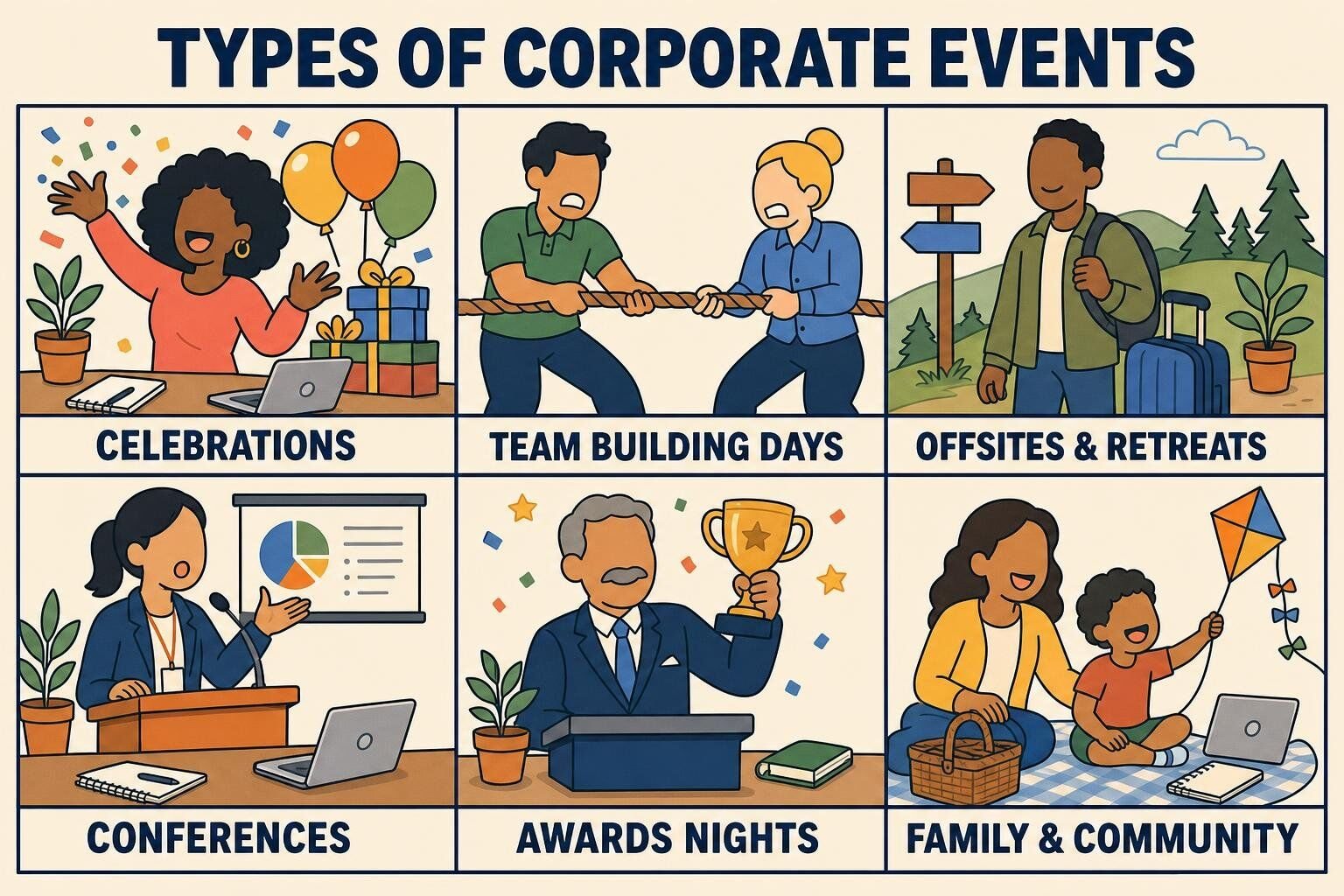
Most corporate events fall into one of eight types, and naming yours is the fastest way to focus the plan: a team building day and an awards gala need different rooms, budgets, and schedules. Here are the main types of corporate events, with examples of each:
Type
Purpose
Examples
Typical timing
Celebrations and parties
Mark wins and milestones
Holiday party, launch party, work anniversaries
December, plus milestones year-round
Team building days
Strengthen working relationships
Hosted games, scavenger hunts, field day
Quarterly
Offsites and retreats
Reset, align, and bond
Day offsite, multi-day retreat
Once or twice a year
Conferences and company meetings
Align the whole company
All-hands, sales kickoff, summit
January and September
Appreciation and awards
Recognize people publicly
Awards night, appreciation day
Q1 and year-end
Family and community
Include the wider circle
Family fun day, company picnic, volunteer day
Summer and fall
Learning and development
Build skills together
Workshops, innovation days, lunch and learns
Monthly or quarterly
Wellness and social
Recharge and mingle
Group classes, mixers, happy hours
Monthly
A conference or offsite usually mixes several types in one agenda: a morning of alignment, an afternoon team building block, an evening celebration. The 30 ideas below slot into any of them. Jump to one that fits:
These company event ideas for employees run in the space you already have: a conference room, a break area, or the office floor. Most cost little beyond snacks and prizes, and most fit inside a working afternoon.
1. Office Trivia Night
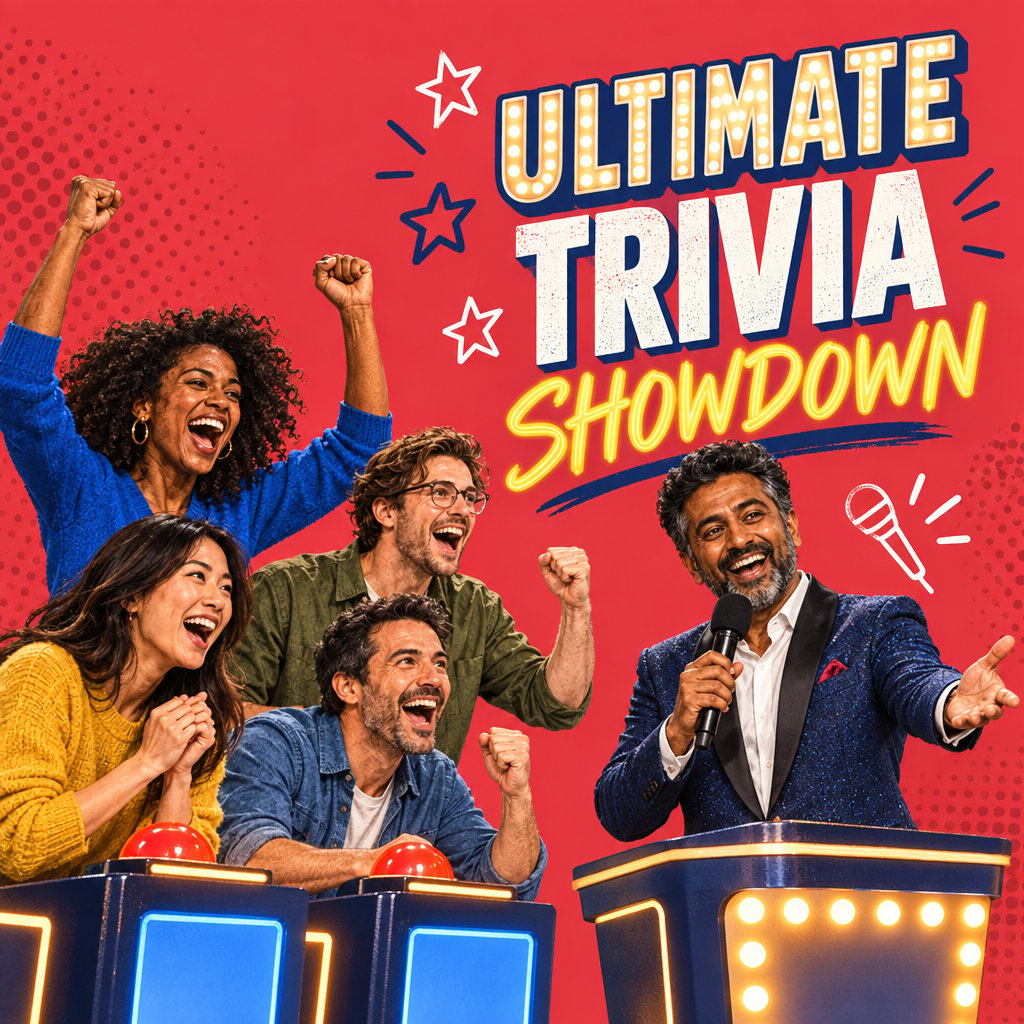
Trivia is the most dependable structured fun an office has. Teams of four to eight answer five short rounds, scores go on a whiteboard, and the winning table keeps bragging rights until the next one. What turns a pub quiz into a corporate event is one full round about your own company.
To run it:
Write five rounds of eight questions: three general rounds (pop culture, geography, a picture round), one company round, and one "name that tune" or emoji round.
For the company round, collect material by message a week ahead: old product names, office legends, the year each team was founded, a quote from last year's all-hands.
Seat mixed teams of four to eight so departments blend, and let each team pick a name.
Read each question twice and give 30 seconds. After each round, have tables swap sheets and mark each other's answers, which saves the host from grading and keeps the heckling going.
Post scores between rounds and save a double-points final question for the comeback.
Best for: mixed groups of 8 to 100+ Time: 60 to 90 minutes Materials (cost): printed answer sheets, small prizes, snacks ($)
Office Olympics turns the supply closet into a medal ceremony. Mixed delegations pick a country name and a flag, then compete in five or six silly events in one afternoon, like paper-plate discus, paper-ball free throws, and sticky-note relays, before a closing ceremony with a podium.
To run it:
Announce the games a week early, draw delegations of five to eight from a hat so departments mix, and give each one time to pick a name, a flag, and a chant.
Choose five or six events that mix speed, aim, and teamwork, and make sure at least half can be played seated.
Set up stations around the floor and rotate teams every ten minutes.
Award gold, silver, and bronze points per event and keep a live medal table.
Close with a podium ceremony, paper medals, and a photo of every delegation.
Best for: a slow Friday afternoon, 10 to 60 people Time: 90 minutes to an afternoon Materials (cost): office supplies, tape, printed medals ($)
A tasting is the easiest premium-feeling event to run in a conference room. Pick chocolate, coffee, cheese, hot sauce, or mocktails, serve small numbered samples, and hand out scorecards so people can argue for their rankings.
To run it:
Pick one category and buy four to six varieties, ideally at different price points.
Number the samples and hide the labels for a blind round.
Hand out scorecards with three columns: taste, guess the price, and one word to describe it.
Reveal the labels at the end and crown whoever came closest on price.
Note allergens on a card at each station so everyone can join confidently.
Best for: afternoon socials, 6 to 40 people Time: 45 to 60 minutes Materials (cost): samples, cups, printed scorecards ($$)
What we've learned: keep portions to two bites or two sips. With six full-size samples, most people stop tasting properly by the fourth. Include one supermarket brand, because the reveal lands best when the cheap option wins. A tasting also slots into an end-of-week social alongside other happy hour ideas.
4. Hands-On Class
Bring an instructor to the office and learn something unrelated to work: cocktail-making, salsa, candle-making, sketching, or terrarium building. The appeal is watching colleagues be beginners together. Hierarchy flattens fast when the VP's candle will not set.
To run it:
Poll the team on three or four class options.
Book an instructor who brings materials and can run the class in 60 to 90 minutes.
Clear table space with good light, and cover it if the class gets messy.
Pair people from different teams at each station.
Close with a show-and-tell, and let everyone take their creation home.
Best for: curious teams, recurring monthly slots, 6 to 30 people Time: 60 to 90 minutes Materials (cost): instructor and materials ($$)
What we've learned: choose a class where everyone leaves holding something. A lopsided candle on a desk keeps the afternoon alive for months, and a lecture is forgotten by Monday. Our list of corporate workshop ideas is a good place to start.
5. Improv Workshop
An improv workshop practices the two skills every team says it wants, listening and building on each other's ideas, through theater games. A good facilitator starts with whole-group exercises and works up to short scenes, so nobody is pushed to perform solo.
To run it:
Start in a circle with whole-group warm-ups like Zip Zap Zop and One Word Story.
Move to pairs with "Yes, And": one person offers an idea, the partner must accept it and add to it.
Try a short group scene with four volunteers while the rest suggest settings.
Debrief for five minutes: where did "yes, and" show up in your work this week?
Best for: communication practice and new teams, 8 to 25 people Time: 45 to 90 minutes Materials (cost): open floor space; a facilitator ($$) or DIY (free)
If your group is nervous, run five minutes of improv games at the top of a regular meeting first and build from there.
6. Story Potluck
The Story Potluck adds one rule to a shared lunch: every dish arrives with a one-line story about where the recipe came from. That is how you find out a teammate's grandmother ran a bakery.
To run it:
Send a sign-up sheet with categories (mains, sides, desserts, drinks) so you do not end up with eight salads.
Ask each person to bring a label card with the dish name, the story, and the main allergens.
Set up a buffet line with each card standing in front of its dish.
Once everyone is seated, go around the table and have each cook tell the story in one sentence.
Collect the recipes into a shared team cookbook afterward.
Best for: every team, monthly cadence Time: 60 minutes Materials (cost): plates, label cards; a catered main if you want one ($)
What we've learned: the story card gives quieter people a ready-made way into the conversation, which a plain potluck does not. To keep a monthly lunch from going stale, alternate it with a catered team lunch.
7. Cooking Competition
Split into squads, hand out a mystery basket or a theme like "best taco wins," and let a panel of coworker judges score the results. A typical office kitchen has a microwave and no stove, so pick the format around the kitchen you have.
To run it:
Pick the format: a live cook in a rented teaching kitchen, a no-cook theme like salsa, sandwiches, or charcuterie boards in the break room, or a bake-off with dishes made at home.
Form squads of three to five and announce the theme or reveal the mystery basket.
Set a firm time limit, around 45 minutes for a live round.
Have judges score each dish from one to ten on taste, presentation, and creativity, plus a People's Choice vote.
Award a golden spatula and post the winning recipe in the company channel.
Best for: food-loving teams, 6 to 30 people Time: 90 minutes Materials (cost): ingredients, utensils, prizes ($$)
A mixer fixes a quiet problem in every growing company: people who work ten feet apart and have never spoken. Invite two or three departments and add enough structure that the room does not split into groups who already know each other.
To run it:
Pick two or three departments that depend on each other but rarely meet.
Run three speed-networking rounds of four minutes each, with a bell between rounds.
Put a conversation-starter card on every table ("What is a project you wish more people knew about?").
Ask each person to name one new contact they will follow up with, then leave the last 20 minutes open, with food, for pairs who want to keep talking.
Best for: growing companies and siloed departments, 10 to 60 people Time: 60 minutes Materials (cost): snacks, printed prompt cards ($)
An Innovation Day is a one-day internal hackathon. Small cross-functional teams pick a problem the company has been ignoring, build a scrappy solution by mid-afternoon, and demo it to the room.
To run it:
Collect a list of real problems a week ahead, from customer complaints to annoying internal processes.
Form teams of three to six on the morning of, mixing departments on purpose.
Give teams five hours to build: a prototype, a process redesign, a mock-up, or a pitch.
Run three-minute demos with a hard timer.
Award categories like Most Useful, Most Ambitious, and Best Demo.
Best for: product, operations, and growth teams, 10 to 200 people Time: one working day Materials (cost): lunch, whiteboards, prizes ($)
What we've learned: the follow-up decides whether the next Innovation Day gets any entries. If no idea ever goes anywhere, people stop pitching, so promise before the day starts that at least one winner gets a pilot.
10. Spirit Week
Spirit week is five themed days that cost almost nothing and give the office a week-long shared joke: Throwback Thursday, Twin Day, Sports Jersey Day, Decades Day, and a finale like a bake-off or costume parade.
To run it:
Publish the five themes a week early so people have time to plan outfits.
Offer an easy one-item option for every theme, like a hat or a sticker, so nobody has to go all in.
Set up a photo corner and post pictures in the company channel each day.
Track participation points by team across the week.
End Friday with a small prize ceremony.
Best for: culture building in slow seasons, any group size Time: five days, a few minutes each Materials (cost): props and prizes ($)
What we've learned: day one is usually the quietest, and participation climbs once the first photos go up, so lead with the easiest theme. Our list of spirit week ideas has more themes.
11. Office Decorating Contest
A decorating contest turns the office into the event. Departments get a zone, a theme, and an equal small budget, then decorate over a week of lunch breaks before a walking tour of judges crowns the winners.
To run it:
Assign each team a zone and give everyone the same budget, around $50 per team.
Set a theme or let each team pick its own.
Allow decorating time during lunch for one week.
Judge on a walking tour with categories like Most Creative, Best Theme Commitment, and Best Use of a Tiny Budget.
Announce winners and leave the decorations up for at least a week.
Best for: creative departments, 10 to 100+ people Time: one week, plus a 30-minute judging tour Materials (cost): a per-team decor budget ($)
The format peaks in December, and our guide to an office decorating contest covers the holiday version, but it works for any season or company milestone.
Corporate day out ideas (corporate fun days)
These corporate day out ideas, also billed as corporate fun days or company outings, trade the conference room for the city. We keep longer lists of company outing ideas and things to do with coworkers.
12. City Scavenger Hunt
A scavenger hunt turns a neighborhood into a game board. Teams of four to six race through checkpoints, photo challenges, and riddles, then regroup for scoring and a winners' toast.
To run it:
Map a walkable route of eight to twelve checkpoints that takes about 90 minutes.
Write a mix of challenges: riddles that lead to landmarks, photo tasks, and one small "talk to a stranger" task.
Give each team a shared photo album and a printed or digital challenge list.
Set a hard return time and a meeting spot with food and drinks.
Score the photos on a big screen at the end and award the best one separately from the overall winner.
Best for: mixed fitness levels, 8 to 100+ people in squads Time: 2 to 3 hours Materials (cost): challenge list, phones, end-of-hunt snacks (free to $$)
What we've learned: photo challenges beat item-collection challenges, because the photos become the recap deck and the recap deck recruits next year's players. Our library of scavenger hunt ideas has challenge lists.
13. Museum and City Tours
A group tour gives a day out a guide, a route, and stories your team would not find alone. Museum tours, food crawls, street-art walks, and boat tours all work, provided you book a private group slot so your team is not sharing the guide with strangers.
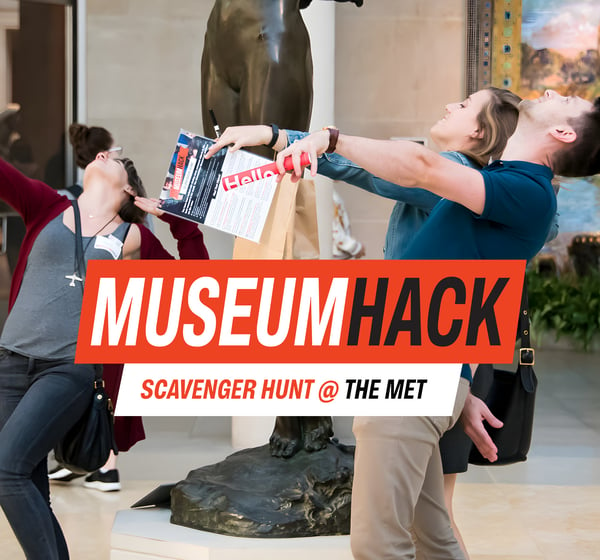
Our favorite is the format our company started with. In 2013, Museum Hack began leading unconventional tours of world-class museums for company groups, an approach CNBC included in its roundup of the wildest, weirdest corporate team-building trip ideas. On the Museum Hack Tour at The Met, a guide leads your team through the museum's strangest stories at speed, with games in the galleries and no shushing. It is rated 4.98 out of 5 across 740 reviews as of September 2026.
To run a tour day:
Pick one anchor tour of 90 minutes to two hours and book a private group slot.
Split groups larger than 20 into parallel tours with staggered start times.
Plan lunch or drinks within walking distance of the end point.
Ask each small group to bring back one story to share over the meal.
Best for: visiting colleagues and small-to-mid teams, 6 to 60 people Time: half a day Materials (cost): per-person tickets ($$)
14. Escape Room Challenge
An escape room is sixty minutes of collaboration against a countdown clock, and a reliable way to find out who on the team stays calm under pressure.
To run it:
Book adjacent rooms with the same theme or difficulty so squads can compare times.
Build squads of four to eight, mixing departments.
Agree on a hint policy before you start so no team feels cheated.
Meet afterward to compare times, and ask each squad one question: who surprised you? The answer is usually a colleague nobody expected to lead.
Best for: problem-solving teams, 4 to 40 people across rooms Time: 60 minutes plus a debrief Materials (cost): per-person tickets ($$)
15. Sports Outing or League
Take the team to a game, or become a team. A reserved section and matching caps turn a regular fixture into a company memory. A season in a local kickball, bowling, or pickleball league gives coworkers a reason to hang out every week, which no single event can match.
To run it:
For an outing, book a group section at a minor-league or college game, where seats are cheaper and group areas are better.
Order matching caps or shirts and arrive early for a team photo.
For a league, pick a low-skill sport so nobody sits on the bench, sign up for a recreational division, and recruit a roster with a few spares.
Schedule a team dinner after the first and last games.
Best for: sports fans and recurring social time, 6 to 100+ people Time: 3 hours, or one evening a week for a league season Materials (cost): tickets or league fees ($ to $$$)
16. Volunteer Day
A volunteer day gives the team a shared purpose no game can replicate: packing meal kits, building at a housing site, sorting donations at a food bank, or running a park cleanup with a friendly team count. In Deloitte's 2017 Volunteerism Survey of 1,000 employed U.S. adults, 70% said volunteer activities boost morale more than company-sponsored happy hours (Deloitte, 2017).
To run it:
Pick a partner organization and ask what they need, rather than what makes a good photo.
Book the date at least a month ahead, since popular nonprofits fill their group slots early.
Split into crews with a clear task and a crew lead.
Track a shared tally, like meals packed or bags collected, and announce it at the end.
Close with lunch and a short thank-you from the partner organization.
Best for: purpose-driven teams and CSR programs, 5 to 100+ people Time: half a day Materials (cost): transport and lunch, sometimes a donation ($)
Corporate party, celebration and work social event ideas
Corporate parties and celebrations mark a record quarter, a product launch, a year's end, or a colleague's milestone. These work social event ideas put something at the center of the party, so it is more than a room with drinks in it.
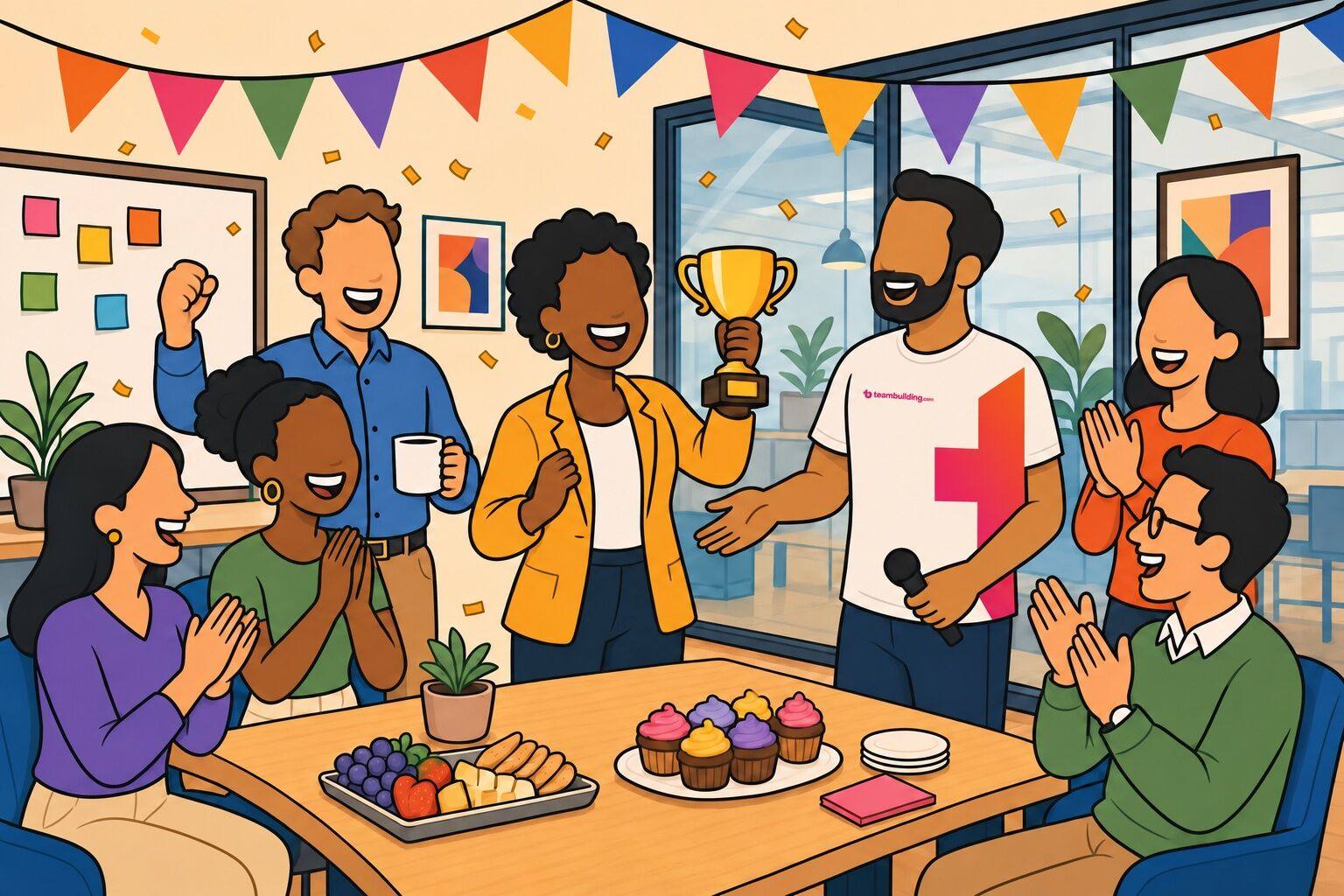
17. Awards Night
An awards night is recognition with production value: categories announced in advance, a short ceremony with an emcee, and small trophies that live on desks for the next year. There is research behind the ritual. In a field experiment by Adam Grant and Francesca Gino, university fundraisers who received an in-person thank-you from a director made about 50% more voluntary calls the following week, while a control group stayed flat, an effect the authors trace to feeling socially valued (Grant and Gino, 2010).
To run it:
Mix serious categories (Mentor of the Year) with personality awards (Best Meeting Cameo, Spreadsheet Whisperer) so every department has a shot.
Open nominations to everyone, and ask for a two-sentence story with each one.
Pick an emcee who keeps it moving, and give each presenter a 60-second limit.
Read part of the nomination story aloud when presenting each award.
Photograph every winner with the trophy and post the album the next morning.
Best for: year-end and Q1 recognition, any group size Time: 45 to 75 minutes Materials (cost): trophies, catering, a slide deck ($$)
The year-end party anchors most corporate calendars, but the same format works all year: a launch party when the big project ships, a celebration for a decade of work anniversaries, or a record-quarter party.
To run it:
Name the milestone in the invite so people know what they are celebrating.
Plan one anchor moment: a toast, a short highlight reel, or a game.
Keep speeches to two or three people, each under three minutes.
Serve food that works standing up, and make great mocktails the default drink.
Thank the people who did the work by name.
Best for: marking real wins, any group size Time: 90 minutes to an evening Materials (cost): venue, catering, entertainment ($$ to $$$)
A guacamole showdown gives a party something to do besides stand around. Teams get identical base ingredients plus a shelf of wild-card add-ins, then compete on taste, presentation, and the best name for their dish. Everyone can mash an avocado, so nobody sits out.
Our hosted version, The Great Guac Off, is the top-ranked in-person event in our catalog by Team Building Score and is rated 4.97 out of 5 across 1,825 reviews as of September 2026. A host runs the contest from the first mash to the final taste test.
To run a DIY version:
Buy enough avocados for one bowl per team of four to six, plus limes, onion, cilantro, and salt. Buy them three or four days early so they are ripe, because rock-hard avocados end the contest before it starts.
Set out a wild-card table: mango, bacon, pomegranate, hot sauces, and one truly strange option.
Give teams 20 minutes to make their guac and name it.
Have a panel of judges score blind, plus a People's Choice vote with chips.
Award a trophy and share the winning recipe.
Best for: office parties and conference socials, 15 to 100 people as a DIY contest Time: 60 to 90 minutes Materials (cost): ingredients, bowls, chips ($$)
What we've learned: the wild-card table is what makes it a party. The team that gambles on something strange gets the biggest reaction whether or not it wins.
20. Casino Night
Casino night is the classic corporate evening event: blackjack, roulette, and poker tables with play money, a cocktail-hour feel, and prizes at the end. It works for a holiday party, a sales celebration, or a conference evening, and guests who do not want to play can enjoy watching.
To run it:
Rent tables and hire dealers who can teach beginners, about one dealer per eight guests.
Give everyone the same stack of play chips at the door.
Close the tables 30 minutes before the end and let guests trade chips for raffle tickets.
Draw prizes from the raffle, so luck matters but everyone has a chance.
Keep one quiet lounge corner for people who would rather talk.
Best for: evening celebrations, 20 to 300 people Time: 2 to 3 hours Materials (cost): table rental, dealers, prizes ($$)
What we've learned: keep it play-money only. Once guests pay to play for prizes, many states treat the night as gambling that needs a license. Trading chips for raffle tickets also keeps the room playing to the end instead of emptying out as people lose their stacks.
21. Team Dinner
The team dinner is our first pick among corporate events for small groups: one table, no seating chart, and a meal long enough for real stories. A little structure turns "dinner after work" into an event.
To run it:
Book a private room or a big round table at a restaurant nobody on the team has tried.
Add a toast tradition: each person thanks one teammate for something specific.
Keep work talk to the first 20 minutes, then switch to a question that goes around the table, like "best trip you have ever taken."
Best for: quarterly team rituals, 4 to 15 people Time: 2 hours Materials (cost): the meal ($$)
A murder mystery gives a small group a shared plot. Each player gets a character and a secret, the accusations start by the second course, and the reveal arrives with dessert.
To run it:
Buy a boxed kit or printable script sized to your group.
Send character cards a few days early so enthusiasts can dress the part.
Run the rounds over a meal, with clues revealed between courses.
Let everyone write down their accusation before the reveal.
Give prizes for the correct guess and the best performance.
Best for: dinner parties and story-loving teams, 6 to 20 people Time: 2 to 3 hours Materials (cost): kit or script, costumes optional ($ to $$)
What we've learned: people who say they are not theater people often commit hardest once they are holding a character card. More plots are in our guide to murder mystery ideas.
Corporate event ideas for large groups
Corporate events for big groups live or die on structure. Two hundred people cannot mingle their way to fun, but they can compete, rotate through stations, and cheer. Every idea here scales past 100 participants. Warm the room up first with large group icebreakers; more formats are in our guide to large group activities.
23. Company Picnic
The company picnic is the classic all-hands celebration: catering or food trucks, lawn games, music, and an afternoon where the org chart disappears. Anchor the day with two or three scheduled moments and let free time fill the gaps, or it becomes a hundred separate lunches.
To run it:
Book a park pavilion or venue with shade, restrooms, and a rain plan, three months out for summer dates.
Schedule three anchor moments: a welcome toast, a tournament final, and a raffle.
Set up lawn-game stations like cornhole, giant Jenga, and a three-legged race.
Plan food that works for every diet, and label it.
Assign a volunteer captain to each station so no one person runs everything.
Best for: all-company summer events, 50 to 1,000+ people Time: 3 to 5 hours Materials (cost): venue, food, games, rentals ($$ to $$$)
A family fun day extends the invitation to partners and kids: game booths, face painting, a magician, and food everyone from age four to seventy will eat. Coworkers meet each other's families, which no adults-only event can offer.
To run it:
Welcome chosen family, including partners, friends, and roommates, so nobody needs a traditional household to join.
Plan activity zones by age: toddlers, kids, teens, and adults.
Book one headline act, like a magician or balloon artist, for the middle of the day.
Collect RSVPs with headcounts by age so food and supplies match.
Send everyone home with a photo from the photo booth.
Best for: family-friendly cultures and milestone years, 50 to 500+ people Time: 4 to 5 hours Materials (cost): venue, entertainers, food ($$$)
What we've learned: the age zones matter more than the headline act, because bored kids end a family day early. We have a full guide to running a corporate family fun day.
25. Field Day
Field day is the company picnic's competitive sibling: tug-of-war, relay races, an obstacle course, and a points system that crowns one champion team. Mix physical events with skill events so people at every fitness level can score for their team.
To run it:
Divide everyone into four to eight color teams, mixing departments.
Plan eight to ten events, at least half of them low-exertion, like trivia stations, ring toss, or an egg-and-spoon race.
Run events in rotation with a referee at each station.
Keep a live points board in the middle of the field.
Finish with one all-teams event and a trophy ceremony.
Best for: inter-department rivalry at scale, 30 to 500 people Time: 3 to 4 hours Materials (cost): equipment, team shirts, trophies ($$)
Live entertainment turns a big room into one audience. You can book a band or a comedian, but an employee talent show produces better stories: bands, stand-up sets, dance numbers, and the one act nobody saw coming.
To run it:
Open sign-ups a month ahead and cap each act at three minutes.
Hold one short tech rehearsal so mics and music work.
Pick a confident emcee and judges who are in on the joke.
Budget for professional sound, because bad audio kills a big room faster than anything.
Give awards in several categories so more acts go home with something.
Best for: year-end galas and conference evenings, 50 to 1,000+ people Time: 60 to 90 minutes Materials (cost): sound system, stage, prizes ($ to $$)
What we've learned: group acts get more people on stage and fewer nerves, so encourage teams to enter together. Act ideas are in our list of talent show ideas, and hired acts are covered in our guide to corporate party entertainment.
27. Hosted Game Show
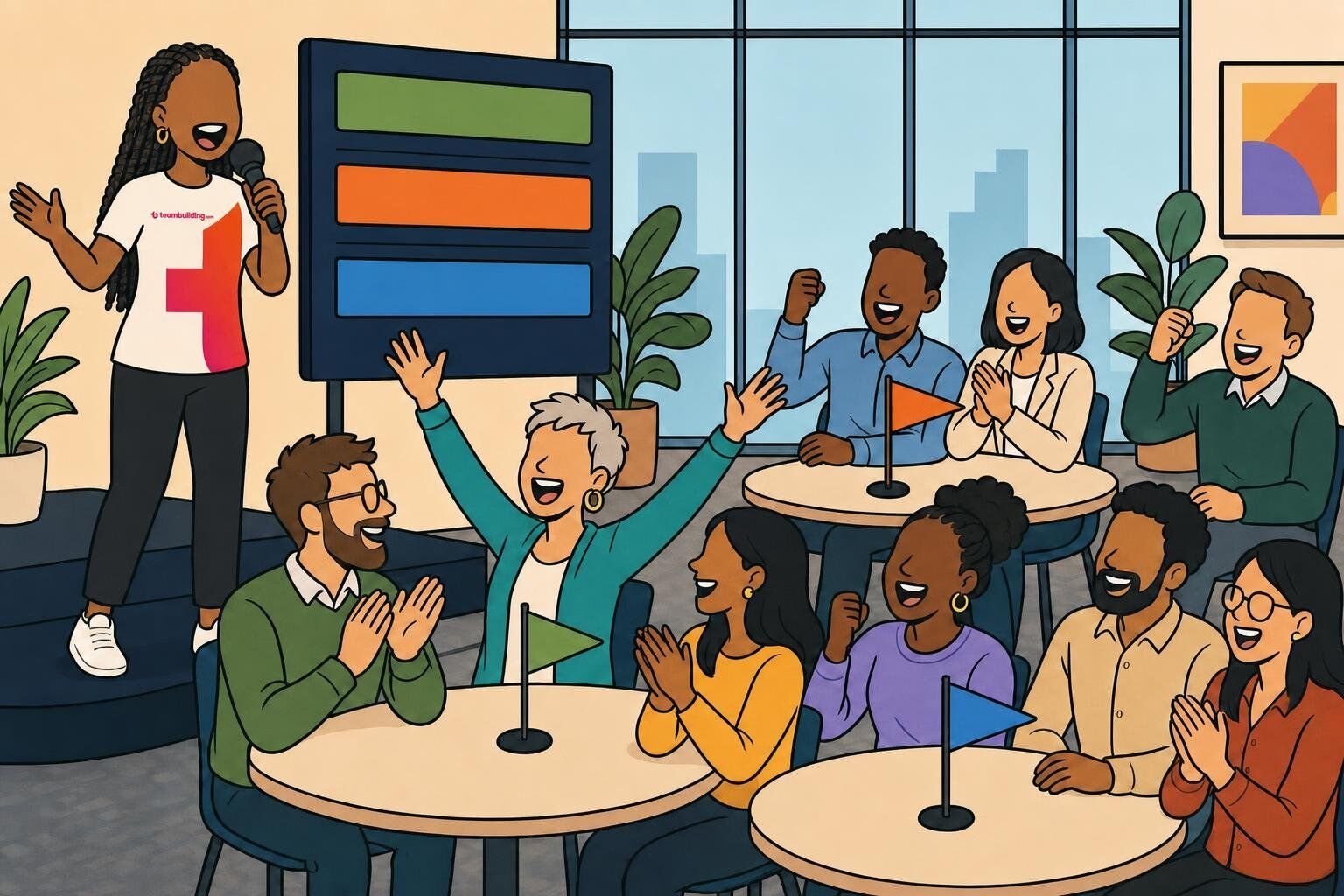
A game show is the most reliable format we know for triple-digit headcounts. An emcee runs team-against-team rounds, a scoreboard keeps the stakes visible, and squads of eight to ten give every person a role.
Our in-person Ultimate Game Show runs rapid-fire rounds inspired by TV classics for 15 to 1,000 players and is rated 4.97 out of 5 as of September 2026. There is a virtual edition of the same show for remote teams.
To run a DIY version:
Seat squads of eight to ten at round tables, each with a colored flag or buzzer.
Plan five rounds in different styles: a survey round, a picture round, a speed round, a music round, and a final.
Put the scoreboard on a big screen and update it after every round.
Cast a high-energy emcee and a co-host to run scoring.
Double the points in the final round so every table stays in it.
Best for: all-hands meetings and conference evenings, 15 to 1,000 people Time: 60 to 90 minutes Materials (cost): screen, mics, buzzers or flags, prizes ($$)
What we've learned: table squads solve the big-room problem. People who would never raise a hand in front of 300 colleagues will happily argue with seven teammates about the answer.
Corporate event ideas for manufacturing companies
Corporate event ideas for manufacturing companies, and for any shift-based workforce in warehouses, hospitals, retail, or logistics, start from a constraint office plans ignore: the whole team is never in one room, and production does not stop for a party. Design events that repeat, travel, or land on a weekend.
28. Food Truck Rally Across Shifts
Book food trucks to park at the facility for a full day, with lunch for first shift, dinner for second, and a late-night run for third. Every crew gets the same event on their own clock, and the parking lot becomes the venue.
To run it:
Book two or three trucks for staggered windows that match each shift's break.
Pay the tab up front, or hand out meal tickets.
Set up picnic tables, music, and a supervisor-run grill station or dessert stand.
Have a leader from each shift say thanks in person during their crew's window.
Best for: plants, warehouses, and hospitals, any size across shifts Time: a full day in rotating windows Materials (cost): food truck fees, tables, music ($$)
What we've learned: night shift notices when it is included on equal terms. The late-night run is the part people talk about.
29. Per-Shift Micro-Events
Instead of one big party half the workforce misses, run the same 45-minute event three times: a trivia round in the break room, a cornhole bracket by the loading dock, or a recognition huddle where supervisors hand out awards shift by shift.
To run it:
Pick one portable format that fits a break-room space and 45 minutes.
Run it once per shift in the same week, with the same prizes.
Keep a running scoreboard across shifts so first shift competes with third. The rivalry gives crews who rarely meet something to talk about at shift change.
Post standings on the break-room board between rounds.
Crown the winning shift with a pizza lunch or a trophy that stays in their area.
Best for: 24-hour operations, 10 to 50 people per shift Time: 45 minutes per shift Materials (cost): game supplies and prizes ($)
30. Family Open House
Once a year, open the facility on a Saturday: guided floor tours led by the people who work there, safety-gear photo ops for kids, demo stations, and a barbecue in the yard. Employees show their families what they build, and every shift can attend at the same time.
To run it:
Pick a Saturday when the line can be paused or safely viewed.
Recruit volunteers from each area to lead short tours of their own station.
Set up kid-friendly stations: hard hats and vests for photos, a product demo, a coloring table.
Run a barbecue or catered lunch in the yard.
Send families home with a small branded item made in the plant, if you can.
Best for: manufacturers and family-friendly cultures, 50 to 500+ people Time: 4 hours Materials (cost): food, safety gear, signage ($$ to $$$)
What we've learned: have employees give the tours themselves. It is a moment of pride that office workers get for free and floor teams rarely do. Pair it with ideas from Take Your Child to Work Day.
Best corporate team building events, ranked by Team Building Score
If you want a sure thing for your anchor event, book a professionally hosted one. A host runs the show, so every person on your team, including the organizer, gets to play. We rank our hosted events with the Team Building Score, a running points total earned from confirmed bookings, verified reviews and ratings. To qualify for the table, an event also needs at least 30 post-event survey responses per question. Here are the top corporate team building events by that score, across in-person and virtual formats:
Ranked by our Team Building Score — a running points total earned through confirmed bookings, verified reviews, ratings, and listing quality, recalculated nightly. Every event shown also has at least 30 post-event survey responses per question; the happier, connected, and NPS columns are computed from the 4,720+ survey responses collected for the 10 events listed here — a subset of all post-event surveys across our catalog. Updated November 2026.
Hundreds of companies sell corporate events, and we would not recommend most of them: much of the industry is generic trivia and recycled workshop decks behind impressive language. We are biased, since we run one of these companies. With that on the table, these are the options we would consider:
About $30 to $100 per person for the events ranked above
Hosted corporate events, virtual and in-person, with published rankings and survey results
Our pick, and not just because it is us. 95% of our hosts are employees and the rest are long-term contractors, which keeps quality consistent, and we publish our rankings and survey outcomes.
Probably the strongest alternative to teambuilding.com, with a broad catalog of games, classes, and workshops for virtual, hybrid, and in-person teams.
Not an events company, but a marketplace for lofts, rooftops, and studios with more character than a hotel ballroom. Pair a venue with a hosted event.
Whoever you book, ask two questions: "Who exactly will host our event?" and "What happens if our headcount changes?" The answers separate professional operations from resellers.
How to plan a corporate event
The same playbook works for a 10-person dinner and a 500-person gala. This is the sequence we use:
Set the goal and budget first. "Celebrate the year," "connect two merged teams," and "thank families" lead to different events. Pick one primary goal, then set a per-person budget. Our guide to team building budgets has benchmarks.
Lock the date before the venue. Midweek afternoons on the clock draw the best attendance. Evening and weekend slots compete with personal lives, while afternoon slots only compete with meetings, and meetings lose.
Count heads honestly. Plan for the people who will come, not the invite list. An RSVP form with a menu question doubles as a commitment device.
Match the format to the group. Competitive teams want scoreboards. Quieter teams want structured small groups. When in doubt, offer three options and let the team vote.
Book the professionals early. Venue, host or entertainment, and catering are the three vendors worth locking first. For most events, four to six weeks ahead is comfortable. For peak season and big formats like picnics, plan a quarter ahead.
Communicate twice, then remind. Announce with the date and the hook, send logistics a week out, and remind people the morning of. Say what to wear and whether the food covers dietary needs, the two questions every invite gets.
End with a next step. Announce the next event before people leave, share the photo album the following morning, and send a two-question survey: a rating and "what should we do next time?" The answers become your case for the next budget.
You can also hand the whole run-of-show to a professional, which is the job of team building facilitators.
The annual corporate events calendar
Corporate events bunch up at predictable times of year, and the fourth quarter is the big one. Plan against those waves in summer, instead of discovering them in November.
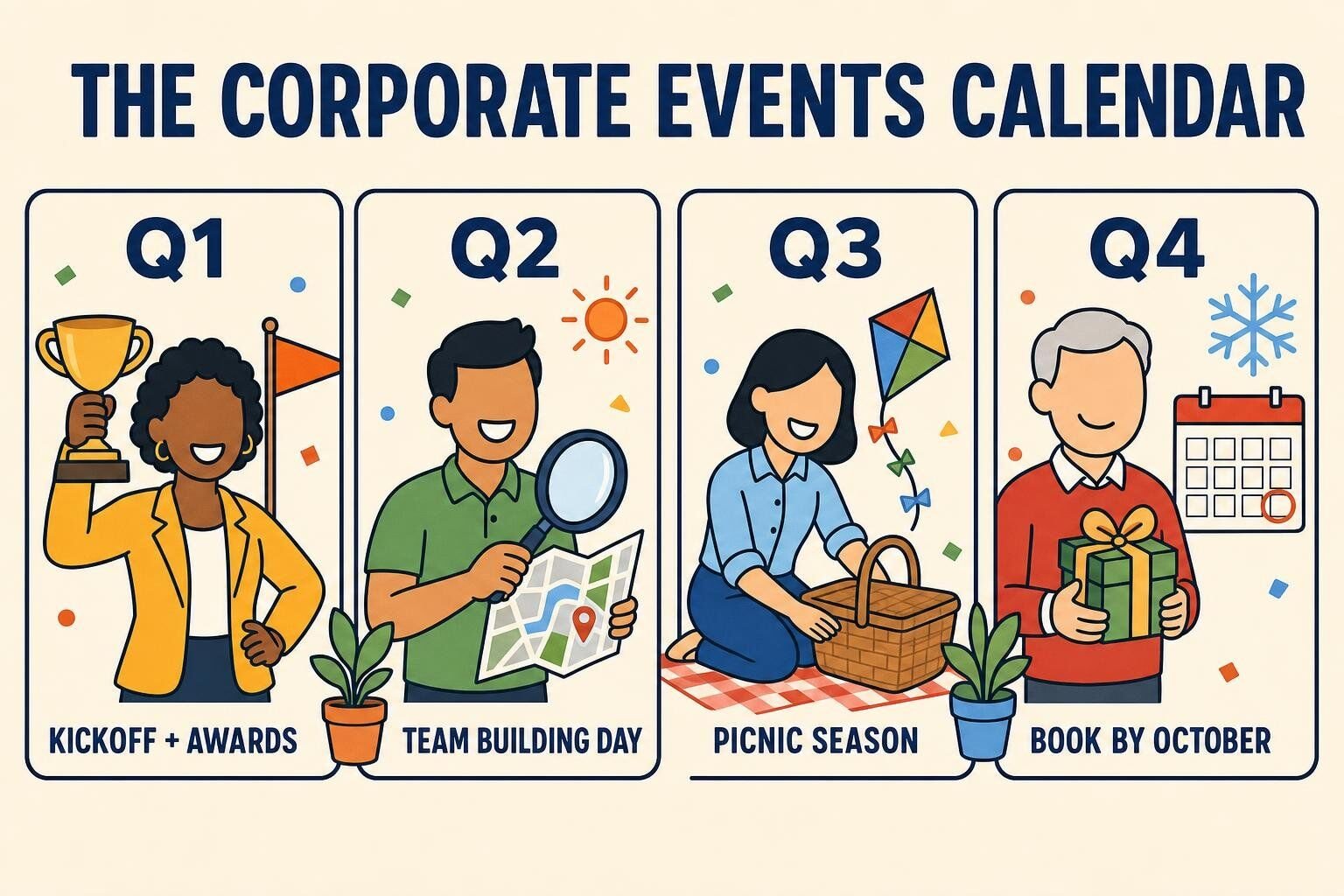
A working annual rhythm has one flagship event per quarter and smaller monthly events in between:
December needs the most lead time. Teams lock in their December events a median of 23 days ahead, and 62% of December bookings are placed in October or November, so the best venues, hosts, and dates are taken before Thanksgiving. If December is too crowded for your team, there is no rule against a January or February celebration, when calendars are emptier.
What we've learned from hosting corporate events
Our events have collected 83,000+ reviews averaging 4.96 out of 5 as of August 2026. Read enough of them and four patterns are hard to miss.
Structure beats budget. The events people rave about have an opener, one anchor activity, and a defined ending where winners are crowned or thanks are said. A modest trivia night with a confident emcee beats an expensive open-bar party where everyone stands in department clumps.
Opt-in gets more people in the room. Every workforce includes karaoke stars and people who would rather watch, and a good event is fun for both. Make costume contests voluntary, fill game slots with volunteers first, and say out loud that watching counts as participating. The fastest way to lose a room is to call someone to a microphone who did not volunteer.
The organizer deserves the event too. When a professional host runs the show, the person who planned the event finally gets to attend it, and organizers tell us so afterward. If you run events yourself, rotate the organizer role. Planning three parties in a row is how event champions burn out.
Cadence beats blowouts. One giant annual party cannot carry a culture. A quarterly flagship plus small monthly events, like a potluck, a trivia hour, or a walking meeting, does more than a single gala. Teams that find a rhythm tend to keep it.
Corporate events for small groups vs large groups
Most corporate events are smaller than the word "corporate" suggests. The median event we host has 16 participants, and half fall between 10 and 27, which means one or two tables rather than a ballroom. Corporate events for small groups can do what big events cannot, which is real conversation. Corporate events for big groups need structure, stations, and a stage. Here is how we would choose:
Some corporate event traditions survive on habit alone. Here is what we would skip, and what to do in its place:
Tradition
What goes wrong
Do this instead
Mandatory fun
Required attendance turns your most reluctant people into resentful ones, and they bring that mood into the room.
Make it opt-in, on the clock
Open bar as the only activity
With nothing to do but drink, the room splits into cliques by 7 p.m. and HR inherits the rest of the night.
Anchor it with an activity and good mocktails
Trust falls and ropes courses for everyone
If a third of the team can only watch because of an injury, a pregnancy, or a fear of heights, it is not a team event.
Pick formats people can play seated
Surprise public performances
The person called up to sing or improvise without warning will find a reason to miss the next event.
Volunteers only
The 6 p.m. Friday "party"
Fun scheduled on personal time reads as a tax, and parents and commuters quietly skip it.
Move it to a weekday afternoon
A meeting disguised as a party
A two-hour all-hands with cake at the end is still a meeting.
Keep announcements under ten minutes
One big party for a shift-based workforce
An event half the crew cannot attend tells them who the company had in mind.
Repeat it per shift or hold it on a weekend
Final thoughts
The companies that get corporate events right treat them as a rhythm, not a rescue: a flagship each quarter, smaller events in between, formats matched to the team, and dates booked before the seasonal rush. Start with one idea from this guide, run it opt-in on a weekday afternoon, and let the two-question survey tell you what to plan next.
Answers from the team at teambuilding.com, where hosting corporate events is the day job.
What are corporate events?
Corporate events are company-organized gatherings that step outside the normal work routine so employees can celebrate, connect, learn, or have fun together. Examples include holiday parties, awards nights, team building days, company picnics, offsites, and volunteer days. Internal corporate events are planned for your own employees, while external events like conferences, trade shows, and client hospitality also involve customers or the public.
What are the main types of corporate events?
The main types of corporate events are celebrations and parties, team building days, offsites and retreats, conferences and company meetings, appreciation and awards events, family and community events such as picnics and volunteer days, learning and development events such as workshops and innovation days, and wellness or social events such as group classes and mixers. Many conferences and offsites combine several types in one agenda.
What are fun corporate event ideas for employees?
Reliable fun corporate event ideas include an office trivia night, Office Olympics, a cooking competition, a city scavenger hunt, an escape room challenge, a volunteer day, an awards night, a casino night, and a hosted game show. For large groups, a company picnic, field day, or employee talent show works well. Most of these can be run in-house for the cost of snacks and prizes.
What are good corporate event ideas for manufacturing companies?
Manufacturing and other shift-based companies do best with events that repeat or travel, because the whole workforce is never in one place. Good options are a food truck rally scheduled across first, second, and third shift, the same 45-minute trivia or cornhole event run once per shift with a cross-shift scoreboard, and a weekend family open house where employees give their families tours of the floor.
How far in advance should you plan a corporate event?
For most corporate events, four to six weeks of lead time is comfortable, and large formats like company picnics or family fun days are best planned a full quarter ahead. Holiday events need the most notice: on teambuilding.com, teams lock in December events a median of 23 days ahead, but 62% of December bookings are placed in October or November, so the best dates are usually gone before Thanksgiving.
How much do corporate events cost?
DIY corporate events like trivia nights, potlucks, Office Olympics, and spirit weeks can cost little more than snacks and prizes. Professionally hosted events on teambuilding.com run about $30 to $100 per person for the top-ranked formats, with a median catalog price of $40 per person for virtual events and $60 for in-person events as of September 2026. Picnics, family days, and holiday parties cost more because of venues, catering, and entertainment, so set a per-person budget first and scale the format to it.










Comments (0)
Leave a Comment